

As you know bruising the teeth is very important. But dental sealants are also a good way to protect your teeth from cavities. But if you have some questions, like what are sealants? Does the process hurt? What does it cost? How long will it protect those new molars? You can find straight answers to each question below.
What Are Dental Sealants?
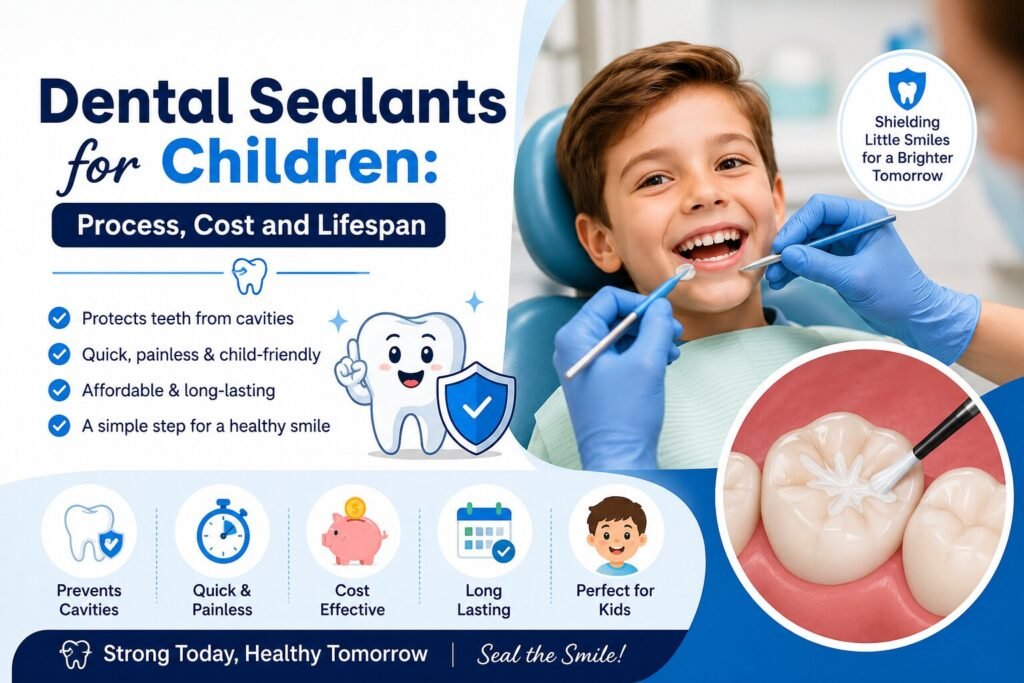
Dental sealants are thin plastic layers. A dentist paints the layer onto the back teeth. Molars & premolars carry deep grooves on their bite surface. It blocks food or bacteria to protect teeth from cavities and hard-to-reach grooves. A toothbrush rarely reaches the bottom of a groove. A sealant blocks that gap. It keeps the tooth clean underneath. The enamel stays safe from the acid that causes decay.
How Do Dental Sealants Actually Work Inside the Mouth?
Being a shield of sorts. They move into the back teeth’s deep grooves and pits, stop food and bacteria from getting in, and cool down into a smooth layer. This stops acids that cause cavities from building up in places where brushing can’t reach them. The dentist cleans the tooth first. Next, a mild gel etches the surface. The etch creates tiny grooves that help the sealant grip. A rinse washes the gel away.
Then the dentist paints on a liquid resin. A blue light quickly dries the glue. The hardened layer bonds tightly to the tooth. Food, plaque, and acid can no longer reach the grooves underneath. Parents often ask about the resin’s safety. The American Dental Association confirms any BPA exposure during placement stays far below a level of concern. The material bonds fast. It never touches healthy enamel with a drill.
Which Teeth Need Sealants, & When Should Your Child Get Them?
Molars carry the deepest grooves in the mouth. The first permanent molars erupt around age six. The second set follows around age 12. These teeth need care (protection) cuz for they have big grooves that hold food and cause cavities. Both sets make the best candidates for a sealant.
Baby teeth can get a sealant too, in some cases. A dentist may choose this route for a child at high risk for decay. The right window matters more than age alone. So a dentist checks each tooth as soon as it fully erupts. You can also explore more tips on dental care for kids to plan the right visit schedule.
What Benefits Do Sealants Give Your Child’s Teeth?
Sealants cut cavity risk in a big way. The CDC reports sealants prevent up to 80 percent of cavities on treated teeth. Kids without them face nearly three times more cavities on first molars than kids with them. That gap adds up fast over a childhood of meals and snacks.
Think of a sealant as a small raincoat for a molar’s grooves. It keeps the daily flood of food and bacteria off the enamel below. That barrier stays invisible once it dries.
A sealed tooth skips a lot of future pain. Fewer cavities mean fewer fillings. Fewer fillings mean fewer school days lost to a dental chair. Your child keeps more of their own natural tooth structure too.
What Happens During a Dental Sealant Appointment?
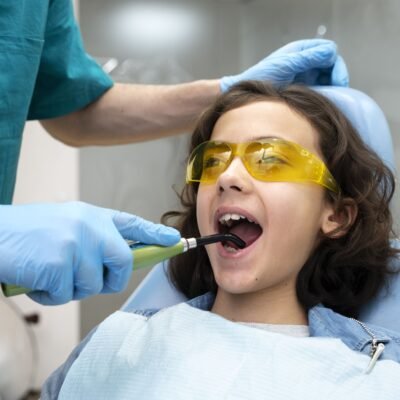
Before applying the liquid plastic sealant, the dentist or dental hygienist will clean the teeth. Then, they will use an acidic etching gel to roughen the chewing surfaces in preparation for bonding. After rinsing and drying the teeth, the sealant will be hardened using a specialized curing light.
- The dentist cleans and dries each back tooth
- A gel etches the surface for thirty seconds
- Water rinses the gel away completely
- Liquid resin flows into every groove
- A blue light hardens the resin in seconds
Most children finish a full set of molars in under thirty minutes. A parent can stay in the room for the whole visit at most offices. Snacks and drinks resume right away with no restriction.
Does Getting Dental Sealants on teeth Hurt?
No, the dental sealants do not hurt. In this procedure, there is no drill that touches the tooth at any point. No needle enters the gum either. Your child may feel a light gel taste or a cool rinse. Most kids call the whole visit easy, not painful. So why does the visit feel so easy for most kids? A sealant appointment often ranks as the easiest stop on a child’s dental visit. Many kids ask when they get to come back.
How Much Do Dental Sealants Cost for Children?
| Scenario | What You Pay |
| Single sealant (per tooth) | $30–$60 |
| Full set, 4 molars | $120–$250 |
| Private insurance (Delta Dental, MetLife) | Often 100% covered |
| Medicaid or CHIP | $0 |
| Filling, for comparison (per tooth) | $150+ |
A single sealant runs about thirty to $60 per tooth. A full set of four molars costs between one 120 and 250 dollars. Costs also depend on the state and dental office. Many pediatric dental insurance plans cover the full amount for kids.If you have private insurance from Delta Dental and Metlife Dental, it can cover 100% of the cost. With government help (CHIP/Medicaid) it also costs $0.
Medicaid and CHIP often include sealants for children at no extra cost. School sealant programs offer another low-cost route in many districts. You can compare that cost against a filling, which often runs one hundred fifty dollars or more per tooth. A sealant costs far less than the repair it prevents.
How Long Do Dental Sealants Really Last?
A sealant lasts between 10 and 15 years on average. Some stay fully intact for even longer with good care. Bite pressure, diet, and daily tooth-care habits all affect that lifespan. A dentist checks each sealant at every regular visit.
Chips or rough spots signal a sealant needs a touch-up. Sticky candy and hard ice both wear a sealant down faster. Good daily tooth-care habits help a sealant last toward the long end of that range. Replacement takes the same quick steps as the first visit.NAs the next step, a light gel scratches the surface.
Sealants vs. Fluoride vs. Fillings — What’s the Difference?
A sealant blocks the grooves on a tooth’s bite surface. Fluoride strengthens the enamel across the entire tooth instead. Both tools work best as a team, not a substitute for each other. You can read in detail about fluoride treatment for kids to see how the two methods pair up.
A filling repairs a tooth after decay already sets in. A sealant works before decay ever starts. That difference marks the real gap between prevention and repair. Prevention almost always costs less than repair, in time and in money.
FAQ’s
Is sealant good for teeth?
Yes, dental sealants are good for teeth. Paint them on the chewing areas of your back teeth (molars) to keep food and germs out. They are made of a thin plastic shield. According to the CDC, sealants reduce the risk of cavities in teeth by almost 80%.
What are the disadvantages of dental sealants?
Wear and tear over time, limited protection, and strict application requirements are some of the disadvantages of dental sealants.
Do dentists still put sealants on teeth?
Yes, dentists are still doing sealants. They are still a common and very effective way to keep food and bacteria from getting into the deep grooves of teeth.

Other Articles
Fluoride Treatment for Kids: Varnish, Gel, and Foam