


Proper teeth treatment for kids is very important. Your child’s dentist just mentioned a fluoride treatment. It strengthens young teeth and lowers cavity risk. Dentists apply it as varnish, gel, or foam & each form works differently. In this article, I will tell you about fluoride treatment, its benefits, and why its matter.
What Is Fluoride Treatment, and Why Does It Matter for Kids?
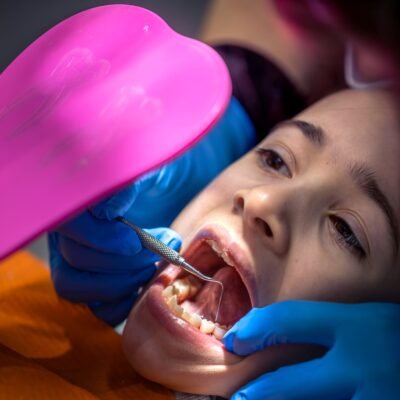
Fluoride treatment is a safe and quick way to deliver a concentrated dose that your dentist applies in the form of foam, gel or mineral varnish to the child’s teeth, far stronger than what’s in tap water or toothpaste.
Kids need this boost because their enamel is still forming, and new teeth absorb minerals fast, which leaves them open to acid from sugar and plaque. Fluoride treatment doesn’t replace brushing. It adds another layer of defense.
How Does Fluoride Actually Protect a Child’s Teeth?
Teeth lose and gain minerals every day. Acid from bacteria pulls calcium and phosphate out of the enamel, and saliva and fluoride push those minerals back in. Dentists call this cycle demineralization and remineralization. Fluoride speeds up the rebuild and forms fluorapatite, a mineral that resists acid far better than plain enamel. Research reviewed by AAPD links professional fluoride application to cavity reductions as high as 59 percent in some studies.
What Are the Types of Fluoride Treatment?
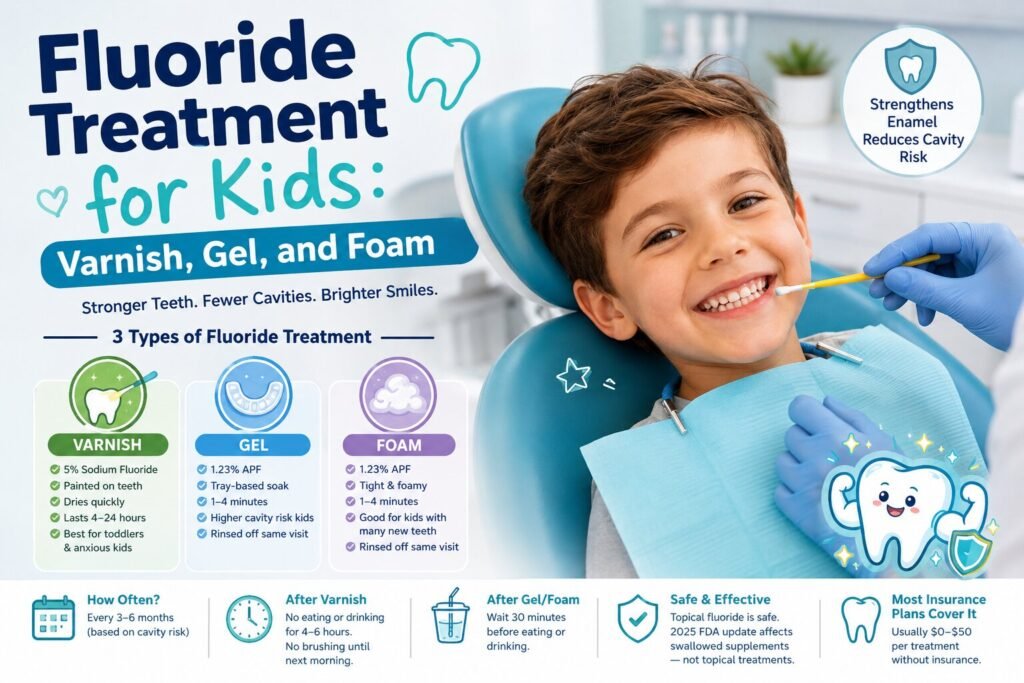
There are 3 main types of fluoride treatment. Fluoride varnish, Fluoride gel, Fluoride foam. The differences come down to strength, timing, and comfort.
Fluoride Varnish: The Quick Paint-On Coating
Varnish contains about 5 percent sodium fluoride. A dentist paints it onto the teeth with a small brush, and saliva hardens the sticky coating within seconds. Most dentists pick varnish for toddlers and anxious kids, since it takes under a minute and needs no tray or long wait. The coating stays on for hours and slowly releases fluoride the whole time.
Fluoride Gel: The Tray-Based Soak
Gel holds a higher concentration, close to 1.23 percent APF. A hygienist fills a tray with gel and places it over the teeth for one to four minutes, giving fluoride time to sink into weak spots on the enamel. Gel suits kids at higher cavity risk, though younger children sometimes struggle to hold still and avoid swallowing it.
Fluoride Foam: The Mouthguard Method
Foam uses the same fluoride strength as gel, in a lighter, airy form. A tray delivers it across every tooth surface in one to four minutes, spreading fast to reach back teeth and new molars. Fewer dentists use foam today, since gel and varnish cover most needs, but some still choose it for kids with several teeth erupting at once.
Varnish vs. Gel vs. Foam: Which One Fits Your Child?
| Feature | Varnish | Gel | Foam |
| Fluoride strength | ~5% NaF | ~1.23% APF | ~1.23% APF |
| Application time | Under 1 minute | 1 to 4 minutes | 1 to 4 minutes |
| Best for | Toddlers, anxious kids | Higher-risk kids who can sit still | Kids with many new teeth |
| Texture | Sticky, hardens fast | Thick gel | Light and foamy |
| Wears off | 4 to 24 hours | Rinsed off same visit | Rinsed off same visit |
How Often Do Kids Need Fluoride Treatment?
Frequency depends on cavity risk, not age alone. AAPD recommends varnish every 3 to 6 months for high-risk kids. The ADA and USPSTF recommend at least every 6 months for moderate risk. USPSTF also recommends varnish starting the moment a first tooth appears, through age 5. Ask your dentist to assess risk at each visit, since it shifts as diet and habits change.
What Should Your Child Eat or Avoid Afterward?
Instructions depend on the treatment used. After varnish, avoid hot drinks, hard or sticky food for 4 to 6 hours, and skip brushing until morning so the coating can release fluoride. After gel or foam, wait about 30 minutes before eating or drinking. Cold, soft foods work best for the rest of that day.
Is Fluoride Treatment Safe? What the 2025 FDA Update Actually Means
Yes, professional fluoride treatment stays safe when a licensed provider applies it. In 2025, the FDA restricted ingestible fluoride supplements, the prescription drops and tablets some kids swallow daily under age 3. That update does not touch topical fluoride. Varnish, gel, foam, and fluoride toothpaste remain safe, first-line tools under FDA, AAPD, and ADA standards. Parents often confuse fluoride in a pill with fluoride painted on a tooth, so ask your dentist which category applies to your child.
Are There Any Side Effects to Watch For?
Fluoride treatment carries a low risk profile. A small number of kids get mild tooth discoloration right after varnish, and it brushes off the next day. Fluorosis, or faint white spots on adult teeth, comes from years of excess exposure, not one treatment, and usually traces back to swallowed toothpaste or over-concentrated water. Reactions to varnish, gel, or foam remain rare, and most kids tolerate all three without issue.
Does Insurance Cover Fluoride Treatment?
Most dental plans cover fluoride varnish for kids, often once or twice a year at no extra cost. Medicaid and CHIP typically cover it too, including applications done at a pediatrician visit. Ask your insurer about your child’s plan, since limits and age cutoffs vary by state and carrier. Families without coverage can expect to pay 20 to 50 dollars per treatment.

Other Articles

Dental Sealants for Children: Process, Cost and Lifespan
Veneers vs Crowns: Which One Fits Your Smile?