


Your child dodges brushing their teeth every morning and night. Have you noticed your child in the bathroom wasting time without brushing, and you beg? Sometimes you just give up. Sound familiar? You’re not alone in this fight. There are Millions of parents who are dealing with their kids who don’t brush their teeth regularly. The good news is? You can fix this problem without doing battles. In this article, I am going to tell you how you can solve this issue in a few days.
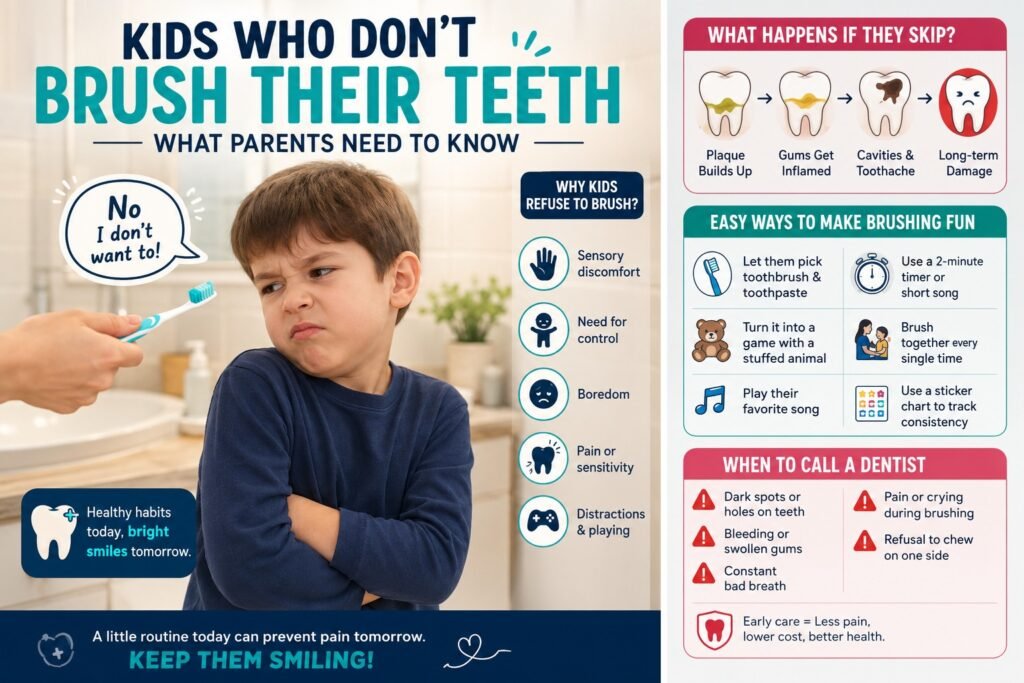
Why Do Some Kids Refuse to Brush Their Teeth?
Kids skip brushing for some reasons. It comes down to laziness.
Sensory issues make brushing uncomfortable for many children. The bristles feel sharp on tender gums. The toothpaste tastes too strong, too cold or too minty. A child with sensory sensitivity may gag or cry during a normal brushing session.
Control matters too: Toddlers refuse tasks parents assign them. Brushing becomes one more thing adults control. Kids resist to feel some power over their own routine. After some time, kids control their bodies and they want freedom.
Boredom plays a role as well: Two minutes feels endless to a four-year-old. Nothing exciting happens during brushing. The task offers no instant reward, so attention wanders fast.
Pain: When new teeth come in, they can make gums pain and if you are using the wrong size of toothbrush, it can also cause pain.
Fear can drive resistance too. A painful cavity, a rough brushing session, or a scary dentist visit can create lasting anxiety. Ask your child a direct question. Does brushing hurt anywhere in their mouth? If he said yes, then communicate with the dentist asap.
Distractions: Their only goal is playing every time. They do not care about future cavity prevention because they are kids, they don’t know about future problems.
CDC data shows cavities remain the most common chronic disease in childhood in the US. Over half of children develop a cavity in baby teeth by age 8. That statistic shows how common early problems really are. Brushing resistance deserves real attention, not dismissal.
What Happens If a Child Skips Brushing?
If your kids are skipping the brush, plaque builds up quickly on teeth within hours after a meal. Plaque is a layer of bacteria that sticks to teeth and makes them feel fuzzy. Bacteria love to eat food and sugar. Bacteria then produce acid. Then it destroys the outer layer of the teeth, which is also known as (enamel).
If a kid doesn’t brush their teeth, this acid party starts almost right away.
Here is exactly how the damage takes place:
When gum disease starts: The bacteria cause gums to bleed and swell. It is known as gingivitis. It hurts the mouth.
Plaque becomes harder: Plaque can harden in a day and turn into a hard shell (tartar). Kids can’t remove tartar at home. A dentist must remove it.
Cavities Develop: The enamel is weakened by persistent acid attacks. Cavities are tiny holes that develop in teeth. This makes eating uncomfortable and results in toothaches.
Permanent Damage: Baby teeth are very important. A cavity in baby teeth can cause permanent pain in teeth while growing.
CDC data shows nearly half of children ages 2 to 19 have some form of tooth decay. Untreated decay affects about 13% of kids in that same age range. Those numbers point to real pain, missed school days, and trouble eating for many kids.
Bad breath and gum irritation show up early too. Your child may complain about pain during meals. If you notice your child only chewing from one side, That’s means it’s an early warning sign.
Does Brushing Get Harder or Easier as Kids Grow?
Age changes how kids resist the toothbrush. A toddler and a ten-year-old fight for different reasons. The fix looks different for each age too.
Toddler kids, ages from 1 to 3, resist brushing out of pure independence. They want control over their own bodies. Short, playful sessions work best at this age. Let your toddler hold the toothbrush first. Finish the job yourself right after. But also do check and balance.
Preschoolers, from ages 4 to 6, brush better with structure. You can add a visual timer or play their favorite songs to keep them engaged for two full minutes. Praise works far better than pressure at this stage.
School-age kids, like from ages 7 to 11, kids often brush too fast. They also tend to skip the back molars completely. Independence grows here. Supervision still matters too. Check their brushing once a week. That quick check catches missed important spots early.
Tweens and teens sometimes stop brushing out of rebellion. Simple forgetfulness plays a role too. Busy mornings, braces, and shifting priorities all add pressure. A quick reminder works better than a lecture. A shared bathroom routine works even better.
How Can You Get Kids to Brush Without a Fight?
Sometimes parents pressure the child to brush because of healthy teeth. Do not pressure your child too much when they are hungry, exhausted or in meltdown mode, because these are weak points your child will not listen to you.
Small changes make a big difference here. You don’t need to force your child or big rewards to build a solid habit.
You can try these simple steps, hopefully, your child will change their habits.
- Let them pick their own toothbrush and toothpaste flavor
- Set a two-minute timer or play a short song
- While you brush, have them lie down on their bed.
- While you’re brushing, ask your child to see you.
- If your kid is asking questions like ” What is toothpaste tell them the benefits”
- Brush alongside your child every single time
- Turn brushing into a game with a stuffed animal first
- If your child is not listening to you, play his favorite song, and give him a toothbrush.
- Donwload that type of games which teach you how to brush your teeth.
- Use a sticker chart to track consistency
Consistency is the key to perfection. A missed night here or there won’t cause damage. Daily habits, built over weeks, create the real result.
When Should You Call a Dentist?
Some situations need more than home care. Watch for these red flags.
- Visible dark spots or holes on teeth
- Bleeding or swollen gums
- Constant bad breath despite regular brushing
- Extreme pain or crying during brushing
- Refusal to chew on one side of the mouth
Early treatment costs less. It also hurts less than delayed treatment. Pediatric dentists are specialists in oral health and calming anxious kids. A professional dentist often solves problems that parents cannot fix alone at home.

Other Articles

What Are 3 on 6 Dental Implants?
How Oral Health Impacts a Child’sGrowth and Development