



You carry over 700 species of microbes in your mouth right now. Most of them cause no harm at all. A few, like Streptococcus mutans, feed on sugar and release acid that wears down your enamel. You can remove this naturally, and you don’t need different types of harsh chemicals to remove it. Below, you’ll find the science behind oral bacteria and the natural methods that actually work.
To get rid of bad bacteria in your mouth naturally, stay hydrated and use natural antimicrobials like baking soda to balance the pH, xylitol to stop bacteria from growing, and diluted tea tree or clove essential oils to damage microbial membranes.
What Causes Bacteria to Build Up in Your Mouth?
Over 700 different types of germs live in your mouth because the mouth is a warm, dark, and damp place. These bacteria are an important part of the ecosystem inside your body. Bacteria stick to your teeth and form a thin, sticky layer called biofilm. You know this layer as plaque. It grows whenever you eat, especially when you take sugary snacks or drinks.
The bacteria inside plaque release acid, and that acid attacks your enamel directly. Your saliva normally buffers this acid and keeps your mouth’s pH balanced. When your diet stays high in sugar, though, the balance tips toward bacteria. If you do not eat for 24 to 48 hours, plaque hardens into tartar. Tartar cannot be brushed away; it needs to be removed by a dental professional.
Does Oil Pulling Really Reduce Oral Bacteria?
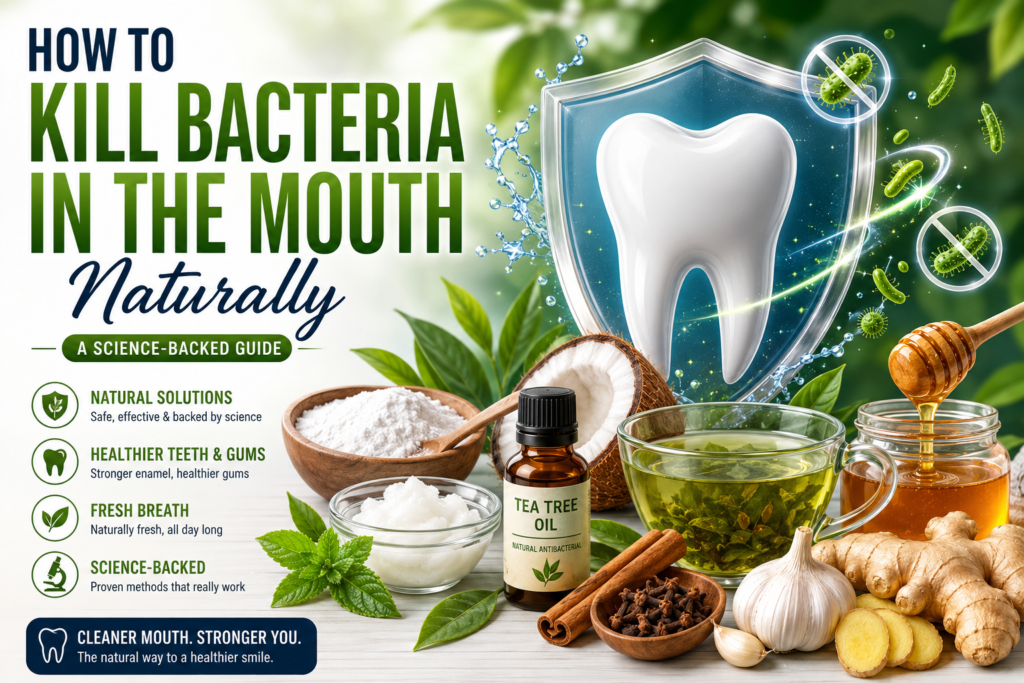
Oil pulling comes from an old Ayurvedic practice. An Ayurvedic method for getting rid of bad bacteria in the mouth is to swish with natural oils like sesame oil or coconut oil for 15 to 20 minutes. Coconut oil contains lauric acid, a compound shown to reduce Streptococcus mutans levels in small clinical trials. The oil helps to reduce bacteria and remove them from your teeth and gums. You should still brush and floss afterward, because oil pulling supports your routine rather than replaces it. You can try it once a day and notice how your breath feels after a week.
Which Foods Kill Bacteria in the Mouth Naturally?
Commonly, your kitchen holds many antibacterial powers. Some foods and drinks can naturally kill germs in the mouth. The polyphenols in both Green and Black tea kill the bacteria that cause tooth decay.
Garlic and onions release allicin and sulfur compounds when crushed, and these compounds disrupt bacterial growth. Onions and garlic (through allicin) are very good antimicrobials that kill germs.
Raw honey, especially manuka honey, produces small amounts of hydrogen peroxide, which creates a hostile environment for microbes.
Crunchy foods carrots, celery and Apples, can clean your teeth naturally. Plain yogurt or cheese helps remove acids that are bad for your mouth.
Ginger’s active compound, gingerol, fights bacteria and calms inflamed gums at the same time. Take these foods regularly, and with this method, you can make a natural defense for bacteria with every meal.
Which Herbs and Natural Compounds Fight Oral Bacteria?
Powerful herbs and natural compounds can combat oral bacteria and improve dental health. Some important choices are neem (which kills bacteria and germs and kills germs), clove (which has eugenol, which is a painkiller and germ killer), tea tree oil (which kills germs), cinnamon (which breaks down bacterial cell walls), and peppermint (which has menthol).
Cloves contain eugenol, a compound so effective that dentists use it in professional materials. You can chew a whole clove gently or add ground clove to warm water as a rinse.
Xylitol, a natural sugar alcohol found in fruits, reduces decay-causing bacteria in saliva and boosts saliva production at the same time. You’ll find xylitol in many sugar-free gums and mints, making it one of the easiest additions to your day.
Why Do Saliva and Hydration Matter So Much?
Your body’s saliva production is strongly influenced by how hydrated you are. They work in tandem to prevent cavities by cleaning food particles off teeth and neutralizing acidic foods, lubricating the mouth for speaking and swallowing, and starting digestion.
Keeping fluid levels steady, such as drinking 91 ounces of water for women & 125 ounces of water for men each day, supports several vital bodily processes:
Dry mouth, known medically as xerostomia, removes this protection and allows bacteria to multiply fast. You should drink water throughout the day to keep saliva flowing steadily. Chewing sugar-free gum after meals also stimulates saliva when water isn’t available. A hydrated mouth is a mouth that can defend itself.
Which Daily Habits Support Natural Bacteria Control?
Brush your teeth 2 times a day and flossing once a day remain the foundation of bacteria control, and no natural remedy replaces this step. Tongue scraping removes the bacterial coating that builds up on your tongue and causes much of your bad breath. Natural toothpaste with baking soda or essential oils like coconut oil can support your daily routine without harsh additives. You should also boycott sugary snacks and drinks, since sugar is the main fuel source for harmful bacteria. Small, consistent habits protect your mouth far better than occasional intense effort.
FAQs
How to kill bacteria in the mouth naturally?
You may naturally kill toxic oral bacteria by remaining hydrated, which increases the strength of your saliva. You can also use baking soda to neutralize pH, xylitol to inhibit bacterial development, and diluted essential oils of tea tree or clove to damage microbial membranes.
How to sanitize the inside of your mouth?
Brush your teeth for two minutes with fluoride toothpaste, floss well, and scrape your tongue to quickly clean your mouth. After that, swish an over-the-counter mouthwash with chlorine dioxide or an alcohol-free rinse around for 30 seconds.
What food kills mouth bacteria?
Some foods have natural chemicals and antibacterial qualities that kill bad bacteria in the mouth, stop plaque from forming, and make breath smell better. Some important food that kill bacteria are raw onions, green tea & black tea, dark chocolate with high cacao content, ginger, plain yogurt and dairy products like cheese.
Which fruit kills bacteria?
Some fruits help keep germs in your mouth in check. Strawberries have ellagitannins and malic acid in them, which kill bacteria and make you salivate. Apples remove bacteria and plaque from teeth, and grapes keep plaque from sticking to teeth. Citrus fruits contain vitamin C, which kills germs. However, they should be eaten carefully to protect tooth enamel.

Other Articles