


Mostly, parents face some issues when it comes to dental crowns for their kids’ teeth. Baby teeth crowns come in 5 main types:
Stainless steel
Composite strip
Resin-veneered
Zirconia
Polycarbonate crowns.
In this article, we will compare 2 main dental crowns Stainless stell vs Zirconia Crown. Each material protects a damaged tooth differently, and the right pick depends on your child’s specific tooth, budget, and needs. In the guide, we will explain every single thing about these 2 dental crowns for baby teeth.
What Are Dental Crowns for Baby Teeth?
A dental crown is a small cap. It covers a damaged tooth completely. Dentists use crowns when a cavity grows too large for a filling, or when a tooth cracks, chips, or wears down.
Baby teeth crowns protect the tooth until it falls out naturally. Two materials dominate pediatric dentistry today, stainless steel or zirconia. Stainless steel pediatric crowns use a metal blend, and zirconia pediatric crowns use a ceramic material.
Both types restore the tooth’s shape and function. Kids can chew, speak, and smile normally again after treatment. The choice between them comes down to strength, appearance, and cost.
Why Do Kids Need Crowns on Baby Teeth?
Baby teeth matter more than adults and parents realize this. They hold space for adult teeth, they support proper chewing, and they help children speak clearly. A tooth lost too early can cause many problems in the future. Kids can not eat solid foods, and their smile will not be good. They only rely on liquid things like water and juices.
Dentists usually recommend a crown after certain problems appear. Large cavities that a filling cannot fix count as one reason. A cracked or fractured tooth counts as another. A tooth that received pulp therapy, sometimes called a baby root canal, almost always needs a crown afterward too.
Nursing bottle decay affects many toddlers’ front teeth, and crowns often become the answer here as well. A 2022 study published in the International Journal of Clinical Pediatric Dentistry followed 40 primary teeth treated with either stainless steel or zirconia crowns over three months. Both options protected the teeth successfully, though stainless steel showed stronger retention rates overall.
What Is a Stainless Steel Crown?
A stainless steel crown is a pre-made silver cap that can cover the whole decayed or damaged part of the tooth. Dentists shape the damaged tooth first, then fit and cement the crown on top. Stainless steel pediatric crowns have served dentists since the 1950s, and they remain the most common crown choice for back molars today.
Strength stands as the biggest advantage here. Stainless steel crowns for children’s teeth handle heavy chewing forces without cracking or breaking. The metal also bends slightly during placement, so dentists can achieve a tight fit even on tricky teeth.
The visible downside is color. A silver cap stands out clearly against white teeth, especially when a child laughs or talks. Back teeth hide the color well, so this rarely bothers parents. Front teeth tell a different story, and many parents look elsewhere.
What Is a Zirconia Crown?
A zirconia crown is a tooth-colored cap made from a white ceramic material (zirconium dioxide). It is very safe and hard material. This is also used to cover damaged and decayed teeth. Zirconia pediatric crowns became popular over the past 15 years as parents began asking for more natural-looking options. Zirconia crowns in pediatric dentistry now appear on both front teeth and select back teeth.
Appearance drives most of the demand for zirconia. The material blends closely with a child’s natural tooth shade, so the crown becomes nearly invisible. Zirconia also contains no metal, which makes it a safe pick for children with metal sensitivities.
Stainless Steel vs Zirconia Crowns: Difference?
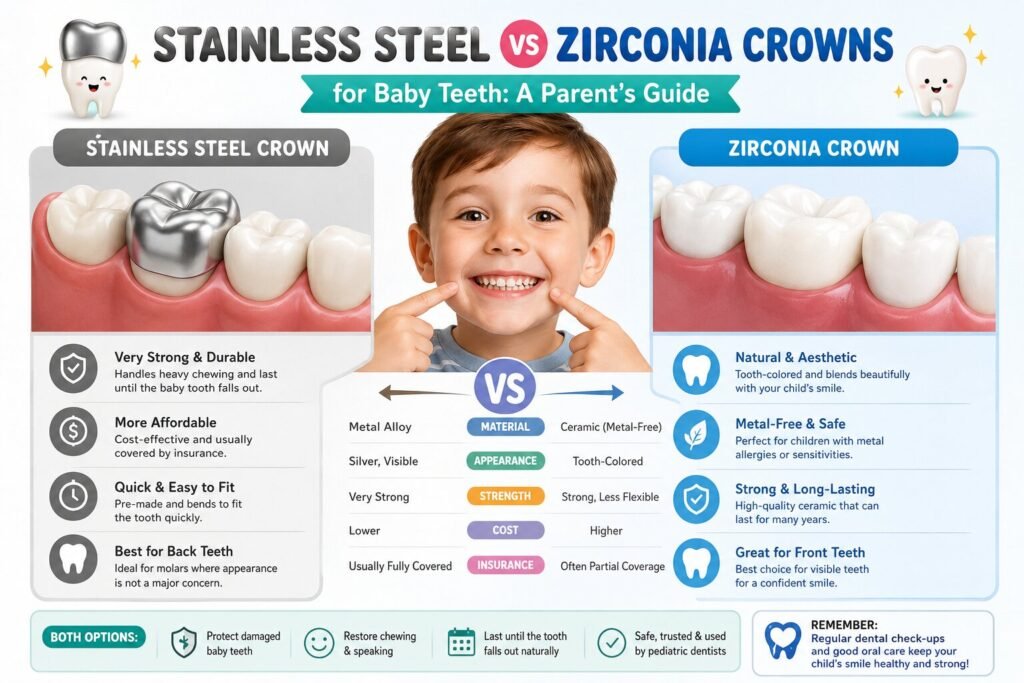
The core difference comes down to material and appearance. Stainless steel uses metal, and zirconia uses ceramic. One shows up silver in a child’s smile, and the other blends in with white enamel. Cost, strength, and gum health round out the remaining differences. The table below breaks each factor down clearly.
| Factor | Stainless Steel Crown | Zirconia Crown |
| Material | Metal alloy | Ceramic, metal-free |
| Appearance | Silver, visible | Tooth-colored, blends in |
| Strength | Very strong for heavy chewing | Strong, but less flexible |
| Best Use | Back molars | Front teeth, visible areas |
| Fitting Process | Bends to fit, faster | Fixed shape, more shaping needed |
| Gum Health | More plaque buildup | Lower plaque, less inflammation |
| Cost | Lower | Higher |
| Insurance Coverage | Usually covered fully | Often partial coverage |
Which Crown Lasts Longer, Stainless Steel or Zirconia?
Research points to a near tie here. A randomized controlled trial published on PubMed followed 105 children with 210 treated teeth over two years. Success rates between zirconia and stainless steel crowns came out nearly identical, with a rate ratio of 0.99.
Zirconia is perfect and durable, it can last around 5 to 10+ years. It is stiffer, though, and a little more likely to chip or break when bitten hard. Stainless steel, on the other hand, is also very powerful and can last longer. It can last around 10 years until the natural tooth comes.
How Much Does Each Crown Cost?
The cost of a stainless steel crown for a child typically depends on your location, per tooth or it is cheaper then zirconia. It can cost between $150 to $500 per tooth.
Zirconia crowns cost higher then stainless steel. It can typically cost around $300 to $1000 per tooth.
Ask your dentist for a written estimate before treatment starts. A clear estimate should show the fee for each crown type, plus any separate charges for the exam, numbing, or follow-up care.
Does Insurance Cover Zirconia or Stainless Steel Crowns?
Insurance coverage differs sharply between the two options. Most dental plans cover stainless steel crowns fully or close to it, since insurers treat them as the standard treatment for a decayed molar. Many families pay little out of pocket for this option.
Zirconia coverage works differently. Some insurance plans classify zirconia as a cosmetic upgrade, and they pay only the amount they would have covered for stainless steel. Parents then cover the difference themselves.
Call your insurance provider before your child’s appointment. Ask directly whether zirconia crowns pediatric dentistry treatments receive full, partial, or no coverage under your specific plan.
Which Crown Is Right for Your Child’s Tooth?
Tooth location plays the biggest role in this decision. A back molar that nobody sees works well with metal crown vs zirconia comparisons tilting toward stainless steel, thanks to its strength and lower cost. A front tooth that shows during every smile often points toward zirconia instead.
Your child’s habits matter too. A child who grinds their teeth at night may do better with the flexibility of stainless steel. A child with a known metal allergy should avoid stainless steel entirely and consider zirconia as the safer route.
How Do You Care for a Child’s Crown at Home?
Crown care stays simple once treatment finishes. Offer only soft foods until the numbness wears off completely. Avoid sticky candy, hard snacks, and chewy gum for the first few days, since these can loosen a new crown.
Brushing and flossing continue as normal around the crown. Gentle brushing twice a day keeps plaque from building up near the gumline. Regular checkups let your dentist catch any looseness or bite problems early, and pairing crown care with a fluoride treatment for kids can further protect the surrounding teeth.
Watch for warning signs after the first week. Call your dentist right away if the crown feels loose, if your child complains of pain, or if you notice swelling near the gum. Most crowns stay firmly in place until the baby tooth falls out on its own.

Other Articles

Dental Sealants for Children: Process, Cost and Lifespan
Dental Sealants for Children: Process, Cost and Lifespan