



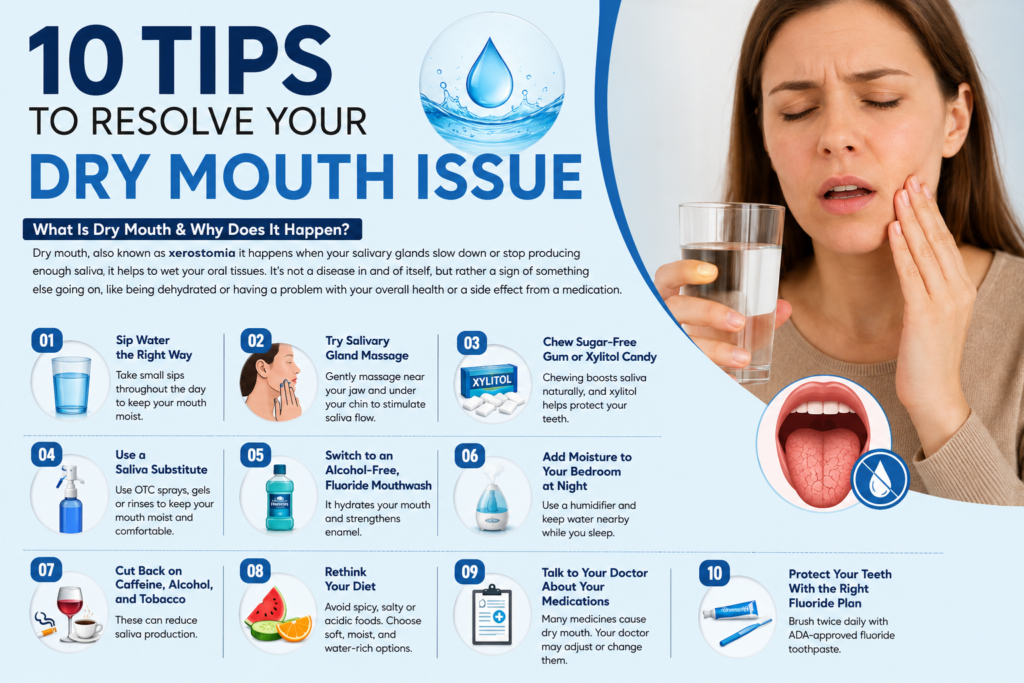
What Is Dry Mouth & Why Does It Happen?
Dry mouth, also known as xerostomia it happens when your salivary glands slow down or stop producing enough saliva; it helps to wet your oral tissues. It’s not a disease in and of itself, but rather a sign of something else going on, like being dehydrated or having a problem with your overall health or a side effect from a medication.
It washes away food, buffers acid, and protects your enamel from decay. Without enough of it, you face cavities, bad breath and irritated gums faster than you’d expect. Medications, aging, dehydration, mouth breathing and conditions like Sjögren’s syndrome are the usual triggers. Once you know the cause, the tips below start working much faster.
Tip 1: Sip Water the Right Way
Do not drink too much water at once. Take small sips throughout the day instead, and keep a bottle with you whether you are in the office, a store, at your desk or in the car. This keeps your mouth moist continuously rather than flooding it for a few minutes, then leaving it dry again for hours.
Tip 2: Try Salivary Gland Massage
Place two fingers below your ear, near your jaw hinge, and press gently in small circles for thirty seconds. This stimulates the parotid gland directly. Repeat under your chin for the submandibular glands. Most people notice a difference within minutes, and you can do this anywhere, at your desk, in the car, or before bed, without spending a cent.
Tip 3: Chew Sugar-Free Gum or Xylitol Candy
Chewing triggers a reflex that pulls saliva straight out of your glands.
Xylitol is perfect: bacteria in your mouth can’t feed on it the way they feed on sugar, so you get relief without raising your decay risk. Reach for it after meals, when saliva flow naturally slows down.
Tip 4: Use a Saliva Substitute
Over-the-counter sprays, gels and rinses mimic natural saliva. Look for xylitol-based products, or ones containing carboxymethylcellulose (CMC), cellulose gum or hydroxyethyl cellulose. Keep one in your bag or on your nightstand, and use it whenever your mouth feels tight, sticky, or hard to swallow.
Tip 5: Switch to an Alcohol-Free, Fluoride Mouthwash
Alcohol-based rinses dry your mouth further, even though they feel refreshing at first. A fluoride, alcohol-free formula moistens your mouth and strengthens enamel at the same time, which matters since dry mouth already raises your cavity risk considerably.
Tip 6: Add Moisture to Your Bedroom at Night
Run a humidifier while you sleep. Most dry mouth complaints peak overnight because saliva flow naturally drops during sleep, especially if you breathe through your mouth instead of your nose. If you wake up at mornings and you are not feel the worst, this is often the fastest fix. Keep water at your bedside, and try an overnight moisture disc if dryness wakes you up.
Tip 7: Cut Back on Caffeine, Alcohol, and Tobacco
Alcohol, tobacco and caffeine all three things reduce saliva production directly, that’s not enough if you’re smoking it slows gland function over time. You don’t need to eliminate them completely, but cut back.
Tip 8: Rethink Your Diet
If your mouth is dry, do not eat salty, spicy and highly acidic foods, they hurt a dry mouth and sting on contact. Choose soft, moist meals instead, and add water-rich foods like cucumber, watermelon or oranges between meals.
Tip 9: Talk to Your Doctor About Your Medications
Over 500 medications list dry mouth as a side effect, including antihistamines, antidepressants, and blood pressure drugs. Do not eat or stop anything on your own. Ask your doctor whether an alternative exists or whether shifting the dose timing could ease your symptoms while you sleep instead of during the day.
Tip 10: Protect Your Teeth With the Right Fluoride Plan
To keep your teeth healthy, use ADA-approved fluoride toothpaste twice a day. For kids under three, use a rice-sized amount, and for kids three and up, use a pea-sized amount.

Other Articles