



You should avoid drinking coffee because it is acidic and has dark pigments also known as chromogens, that stain teeth. A typical cup of coffee sits around a pH of 5, which is acidic enough to soften enamel temporarily. No matter whether you are drinking black coffee or a milky one, both affect your teeth negatively. Coffee can weaken enamel and cause oral health issues.
The short answer is yes, coffee can affect your teeth and gums, but the full picture is more layered than most articles admit. Enamel wear, staining, and even gum health all come into play. The most important thing is how you drink your coffee? When you wake up and want a cup of coffee, after breakfast, at work, or late at night. A few things about coffee might genuinely surprise you.
The good news. Moderate coffee intake, paired with solid oral hygiene, rarely causes serious harm on its own. Problems tend to show up when coffee habits combine with poor brushing, dry mouth, or frequent snacking on sugar.
How Does Coffee Affect Your Tooth Enamel?
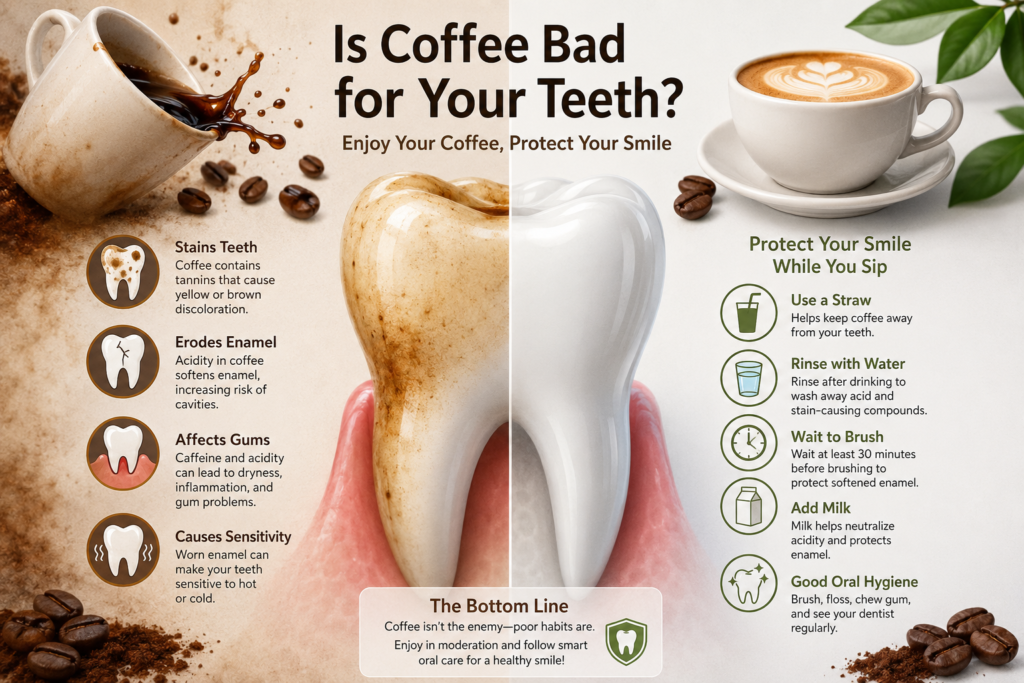
Coffee is naturally acidic and has chemicals in it called polyphenols and tannins that can stain tooth enamel. Because the enamel on your teeth doesn’t grow back, drinking coffee on a regular basis can slowly weaken it. This makes your teeth more likely to get cavities, permanent discoloration and decay.
Every time you drink coffee, the acid softens the enamel surface for a short window, usually 20 to 30 minutes. Milk changes the equation slightly. Calcium and proteins in milk can buffer some of the acidity, so a latte is generally gentler on enamel than a straight black coffee sipped slowly over an hour.
Can Coffee Affect Your Gums, Too?
This question is very rarely comes up in coffee vs teeth articles.
Yes, coffee can affect your gums. Because coffee is acidic, it has caffeine, which dries out your gums and added sugars, which can inflame and irritate them. But some studies also show that the natural chemicals and antioxidants in black coffee may help protect against gum disease by reducing inflammation.
A 2022 systematic review looked at ten studies on coffee and periodontal (gum and bone) health. The findings were genuinely mixed: most of the studies found a negative link between coffee intake and periodontal health, while several others found daily coffee actually offered a protective effect against alveolar bone loss. Only one study found no connection at all.
Researchers noted that coffee’s antioxidant and anti-inflammatory properties appear to boost antioxidant activity in gum tissue. On the flip side, high caffeine intake has been linked in some studies to interference with bone-building cells, which could slow healing after procedures like tooth extractions.
Does Hot Coffee Hurt More Than Cold Coffee?
It is true that spilling hot coffee is much worse for your health than pouring cold coffee. The temperature plays an important role. Hot coffee can trigger sharp sensitivity if your enamel is already thin, since heat travels through exposed dentin more easily than through healthy enamel.
Cold brew offers a genuine advantage here. Because it’s steeped in cold water for a long period instead of brewed hot, cold brew tends to come out less acidic than traditional hot-brewed coffee. Lower acidity means less enamel softening per cup.
If we talk about hot coffee, it has high thermal energy, which can damage the skin tissue. On the other hand, cold coffee causes thermal burns. If your stomach is sensitive, cold coffee or iced coffee is a better option for you because it is less acidic. If you already deal with sensitive teeth, changing your hot coffee to cold brew or iced coffee, sipped through a straw, is one of the simplest changes you can make.
Is Decaf Coffee Any Safer for Your Teeth?
It’s true that decaf coffee is a little better for your teeth than regular coffee. Both are very acidic and contain tannins that stain, but decaf doesn’t have caffeine, which can dry out your mouth and reduce saliva, which helps fight cavities. But there isn’t much of a difference.
Decaf may offer one narrow benefit. If the gum and bone concerns from the research above worry you, lower caffeine content could reduce that specific risk. For staining and enamel wear, though, decaf and regular coffee behave almost identically.
How Many Cups of Coffee Start Causing Damage?
If you regularly drink more than 400 milligrams of caffeine every day, which is about four 7 to 8-ounce cups of brewed coffee, you may start to experience negative side effects and even long-term damage. If you drink more than six cups of coffee daily, it can lead to heart disease. For most patients with good hygiene, one to two cups a day is not harmful.
What Are the Signs Coffee Is Hurting Your Teeth?
Watch for these signals, and don’t ignore more than one at a time:
- Yellow or brown tint that whitening toothpaste can’t touch
- New sensitivity to hot or cold foods and drinks
- Enamel that looks dull or feels rough to your tongue
- Tender or bleeding gums, especially after flossing
- Bad breath that persists even after brushing
Have you noticed any signs? It can happen occasionally. Several showing up together is worth a conversation with your dentist.
How Can You Drink Coffee Without Damaging Your Teeth?
Small habit shifts protect your teeth without asking you to quit coffee entirely.
- Sip through a straw when you drink iced or cold coffee
- Rinse your mouth with plain water right after finishing a cup
- Wait at least 30 minutes before brushing
- Add milk to soften the acidity
- Choose cold brew over hot brew when sensitivity is a concern
- Chew sugar-free gum afterward to boost saliva flow
- Keep up with cleanings every six months
When Should You See a Dentist About Coffee-Related Damage?
Book an appointment if staining won’t budge with whitening toothpaste after a few weeks of consistent use. Sensitivity that shows up out of nowhere is also worth checking, since it can point to enamel thinning rather than a temporary issue.
Bleeding or sore gums deserve prompt attention too, especially given the mixed research on coffee and periodontal health. It’s better to catch early gum changes than wait for them to progress.
FAQ’s
Does coffee cause cavities?
Coffee doesn’t cause cavities immediately, but over time, it can wear away tooth enamel, which can lead to cavities. The risk goes up a lot if you drink slowly, drink multiple cups during the day, or add syrups and sugars that cavity-causing bacteria that cause cavities admire.
Is coffee bad for teeth?
It’s true that coffee is bad for your teeth. It’s acidic, which can damage tooth enamel, and it has tannins in it that stain things permanently. But the severity depends on how you drink it and how well you take care of your teeth. Many people who drink coffee every day avoid major damage completely.
How bad is coffee for your teeth?
There are three main reasons why coffee isn’t great for your teeth: the staining pigments, the mild acidity, and the sugar that is usually included. Even though it doesn’t hurt your teeth immediately, drinking too much regularly can turn your teeth yellow, weaken the enamel on the outside, and increase the risk of cavities if you add sugar.
How can I drink coffee without damaging my teeth?
To protect your teeth from coffee, drink it through a reusable straw that is not in contact with your front teeth, add a splash of milk to balance the acids and water down the coloring pigments, and don’t brush your teeth for at least 30 minutes after drinking to keep the enamel from wearing away.
Coffee can stain your teeth, wear away your enamel with acid, and damage them with sugar if you add sweet things to your coffee.
Is one cup of coffee a day bad for your teeth?
If you maintain drinking one cup of coffee daily should not harm hygiene, your teeth. But the acidity and tannins in coffee can damage tooth enamel, discolor surfaces, and even make foul breath worse over time.
What’s the worst drink for your teeth?
In general, people think that drinks like energy drinks, sports drinks and sodas with a lot of sugar are bad for your teeth. These beverages have a detrimental mixture of high sugar levels and potent acids that erode tooth enamel, rendering teeth particularly vulnerable to decay and cavities.

Other Articles

Oil Pulling vs Mouthwash: Which One Actually Works?
10 Tips to Resolve Your Dry Mouth Issue