Your smile makes your everyday life better, and most people never notice. Food and drink play a more important role in the health of your teeth than any other daily habit. Some snacks feel harmless but quietly wear down your enamel. Do you know which types of food are worst for your teeth? In this guide, I will tell you 7 worst types of food for your teeth’s health.
What Makes a Food Bad for Your Teeth?
Research tell bacteria live in our mouth at all times. When you eat any sweet food, they feed and starch left behind after meals. The process creates acid & acid attacks the hard outer layer of your teeth, called enamel. Repeat attacks break enamel down over time, and that opens the door to cavities.
The American Dental Association confirms plaque forms a sticky film on your teeth within hours of eating. Saliva fights back, but sugar and acid overload can outpace it. Frequency matters as much as the food itself. A soda sipped all afternoon does more damage than one finished in five minutes.
Which 7 Foods Damage Your Teeth the Most?
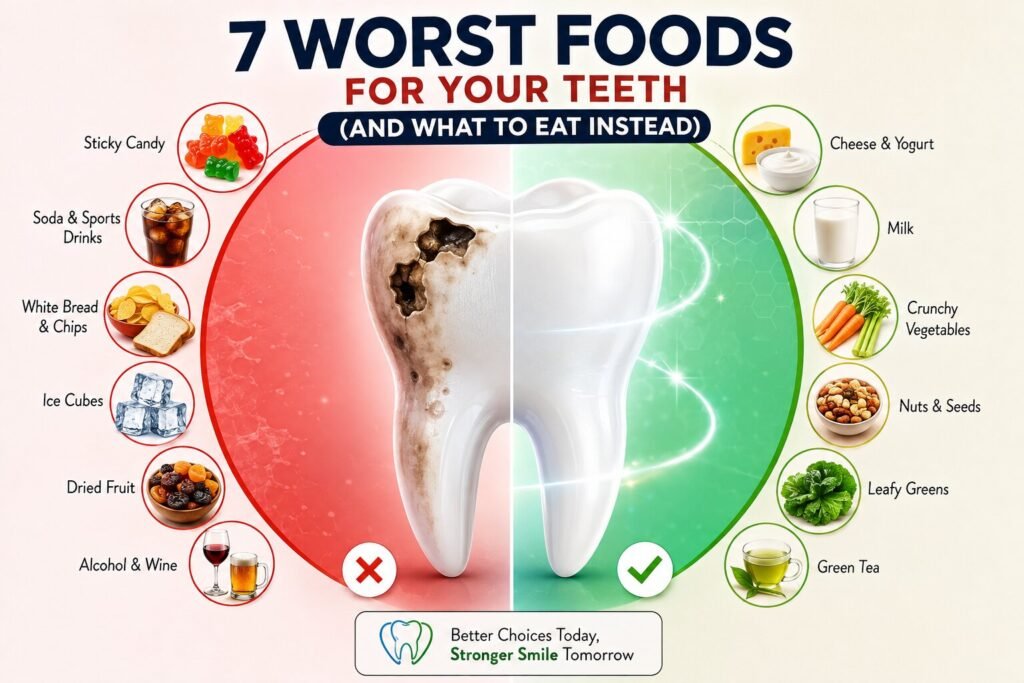
Some foods are the danger in the list, according to many professional dentists and major health bodies. Seven foods that damage teeth:
Sticky Candy
Caramels, taffy, Popcorn, Cereal, apples, pears, hard bread, toast, ice, and gummy sweets cling to tooth surfaces long after you swallow. Sugar trapped in these gaps feeds bacteria non-stop. The Cleveland Clinic lists sticky sweets among the top offenders for cavity risk.
How to fix: Rinse your mouth with water right away. Brush within thirty minutes if you can.
Citrus Fruits
Lemons, oranges, limes, Mandarins, Grapefruits, Specialty Citrus, and grapefruit taste healthy, and they are, in most ways. However, their acid content softens enamel fast on contact. Repeat exposure wears the tooth surface thin over months.
How to fix: Eat citrus fruit with a meal instead of eating them alone. Skip the toothbrush for thirty minutes after, since brushing softened enamel causes more harm.
Soda and Sports Drinks
Sugar or acid combine in one glass, and that pairing hits your teeth twice. Phosphoric and citric acid erode enamel, then sugar feeds the bacteria left behind. The Mayo Clinic links frequent soda intake directly to higher cavity rates.
- Beer & regular diet soda
- Wine & fruit juice
- Lemonade
- Spirits and carbonated drinks
How to fix: Use a straw to reduce contact with your teeth. Water remains the safest daily drink.
White Bread & Chips
Refined carbs break down into sugar the moment saliva touches them. Chips and soft bread also wedge between teeth and stay there. Bacteria then feast on the trapped starch for hours.
- Pasta
- Potatoes
- Canned fruits
- Snack chips
- Potato
- Bread
- Cereals
- Milk
How to fix: Floss soon after a starchy snack. Choose whole-grain options when you can. Drink raw milk.
Ice Cubes
A crunchy habit: water becomes ice, water is good, but chewing ice is not good, it cracks enamel or damages gums. Small fractures build up and weaken the tooth structure over time. Dentists treat more chipped-tooth cases tied to ice than most people expect.
How to fix: You can sucking ice until it melts. It is better than chewing.
Dried Fruit
Raisins, dates, and dried apricots pack a sugar punch far beyond fresh fruit. The sticky texture glues sugar to tooth surfaces, much like candy does. Health-conscious eaters often miss this risk completely.
How to fix: Pick fresh fruit over dried when you can. Rinse your mouth after a dried-fruit snack.
Alcohol & Wine
Alcohol lowers saliva output, and saliva is your natural defense against acid. Wine also carries its own acidity, so red and white varieties both wear down enamel. Dry mouth from alcohol raises your cavity risk long after the glass is empty.
- Wine and Beer
- Whiskey and Rum
- Gin and Liqueurs
- Vodka and Tequila
How to fix: Drink simple water daily between glasses. Never skip your nightly brush after a drink.
Does Frequency Matter More Than the Food Itself?
Yes, Time plays a bigger role than most people realize. If you eat a cookie at lunch causes less harm than the same cookie nibbled over two hours. Saliva needs a break between exposures to neutralize acid & rebuild minerals. The CDC recommends limiting between-meal snacks for exactly this reason.
Grazing throughout the day keeps your mouth in acid-attack mode nonstop. A tighter eating window gives your enamel real recovery time. Small habit shifts, not full food bans, protect your teeth best in the long run.
What Can You Eat to Protect Your Teeth?
- Cheese
- Plain Yogur
- Milk (restores minerals your enamel needs)
- Crunchy vegetables like (carrots & celery boost saliva flow and scrub your teeth naturally.)
- Green tea or sugar-free gums
- Cheese
- Fatty fish like tuna and salmon
- Leafy greens like kale or spinach
- Eggs
- Fruits like carrots, apples and celery
- Green tea and black tea
- Seeds and nuts
For a deeper look at food choices that support whole-body wellness alongside your smile, Every Health Solution breaks down practical daily nutrition swaps.
When Should You See a Dentist About Diet Damage?
When you eat or drink hot or cold, or it feel sensation, it means sensitivity signals enamel wear worth a checkup. Visible stains, cracks or pain during meals need attention fast. Regular cleanings can catch damage long before it turns into a real problem. When you see these signs, immediately visit your dentist.

Does Donald Trump Wear Dentures?
Does a Dental Deep Cleaning Hurt?