
Most people dread wisdom teeth removal. The surgery itself takes only minutes. But the recovery? That part demands your full attention, especially what you eat. Your regular food directly affects how fast you heal. Eating the wrong food has a 100% effect on your teeth and can cause painful complications. Make the right choices, and you bounce back faster than expected. In this article, I will tell you which types of food you should eat after wisdom tooth surgery.
What Are Wisdom Teeth?
Wisdom teeth are the third and final set of molars. They appear at the back of the mouth, two on top and two on the bottom. Some people see their wisdom teeth at the age of 17 to 25. It is not mandatory when you are 17 and when you face a wisdom tooth it depends from person to person; some see their wisdom tooth at 17 some see it at 19 and some see it at 22. If you are between 16 and 25 and feel pressure or discomfort at the back of your mouth, visit your dentist. Do not ignore it.
Dentists call them “wisdom teeth” or “third molars” because your other teeth come in before these. Wisdom teeth often cause problems. The jaw does not always have enough room to accommodate them. A wisdom tooth may grow sideways, remain trapped beneath the gum, or push against neighboring teeth.
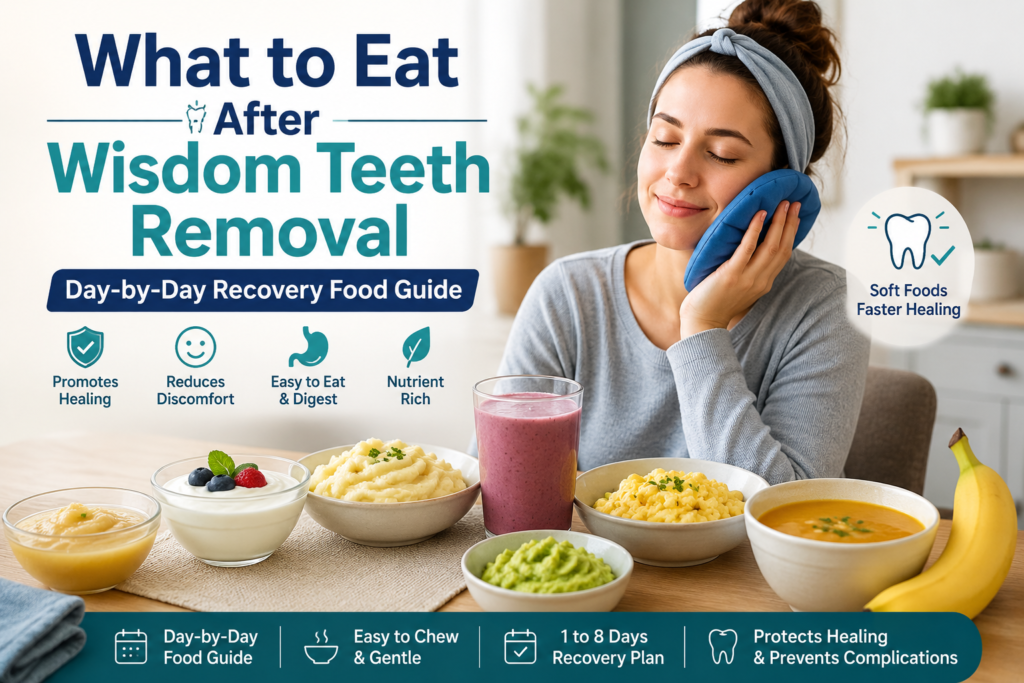
Day 1 After Wisdom Teeth Removal: Liquid and Ultra-Soft Foods Only
After the wisdom teeth removal first 24 hours are critical. The surgical area bleeds lightly, swells, and feels tender. Anesthesia may still linger in your system. What you should eat on Day 1, you should protect the blood clot and give your body rest.
What to eat on Day 1:
- Room-temperature water: Sip it frequently. Stay hydrated but avoid gulping large amounts at once.
- Yogurt: Choose Greek yogurt (plain or vanilla) or smooth varieties. Avoid that one with fruit chunks, seeds or granola.
- Applesauce: Smooth and easy to swallow. No chewing required.
- Pudding and gelatin: Both slide down effortlessly. Cold gelatin also soothes sore tissue.
- Ice cream (plain): Eat plain Ice cream to reduce swelling and numb discomfort. Do not eat cones, nuts and crunchy ice cream.
- Bone broth or clear soup: Lukewarm only, never hot. Avoid using hot liquids because they increase bleeding risk.
- Blended smoothies: Packed with nutrients. Blend fruits, Greek yogurt, and soft vegetables. Drink directly from a cup or spoon — never a straw.
- Meal replacement shakes: Instant breakfast drinks or protein shakes deliver nutrition without effort.
Days 2 and 3: Soft Foods That Require Minimal Chewing
Most cases of swelling often peak around Day 2 or 3. You may notice bruising on your jaw or cheeks. Your mouth may feel stiff. The blood clot is now more stable. You can introduce soft foods that require minimal chewing effort.
What to eat on Days 2 and 3:
- Mashed potatoes: A perfect food for recovery. Mix them with butter and gravy for extra calories and flavor. Avoid adding bacon bits or anything crunchy.
- Scrambled eggs: It is soft, full of protein, and simple to make. Be careful when you cook them so they stay soft.
- Mashed banana: Bananas soften easily and require no preparation.
- Mashed avocado: High in healthy fats and nutrients. Season it lightly or enjoy it plain.
- Oatmeal: Let it cool to lukewarm before eating. Add soft fruit or honey for flavor.
- Soft-cooked or steamed vegetables: Cook them until they fall apart easily. Carrots, zucchini and sweet potatoes all work well.
- Cottage cheese: High in protein and extremely soft. It is a smart choice for early recovery.
- Hummus: Smooth hummus pairs well with soft pita or can be eaten alone with a spoon.
- Soft-boiled eggs: An alternative to scrambled eggs. Easy on the jaw.
Days 4 and 5: Slightly Firmer Soft Foods
Swelling or pain begins to decrease after 4 Days. Many people feel noticeably better by Day 5. The clot becomes more secure as tissue heals over it. You can now expand your diet to include slightly firmer foods & chew carefully. In case you feel pain during chew, then stop eating immediately and visit a dentist.
What to eat on Days 4 and 5:
- Soft pasta: Cook it for 1 to 2 minutes longer than usual. Overcooked pasta is easier to eat.
- Macaroni and Cheese: Macaroni and cheese are soft foods and easy to cook.
- Pancakes: Pancakes are soft, easy to cut into small pieces and easy to eat.
- Flaky fish: Salmon, tilapia, and cod flake apart gently. Avoid anything breaded or fried.
- Chicken noodle soup: Choose soft noodles and well-cooked it, tender chicken. Let the soup cool before eating.
- Soft rice: Well-cooked, slightly sticky rice works well. Avoid fried rice.
- Tofu: Silken or soft tofu requires almost no chewing. Add it to soups or eat it plain.
- Greek yogurt: It is thicker and has more protein than regular yogurt. A great snack choice.
- Refried beans: Smooth and protein-rich. Serve them warm, not hot.
- Soft cheese: Brie, ricotta or cream cheese all go down easily.
Days 7 and 8: Transitioning Toward Normal Foods
Most people feel better by Day 7 or 8. Swelling subsides. Stiffness in the jaw decreases. The surgical sites close over more completely. You can now begin transitioning toward normal foods. Begin by making your best food softer. Chew slowly and deliberately. Keep using the side of your mouth away from the extractions.
What to eat on Days 7 and 8:
- Tender chicken or turkey: Shredded or finely chopped. Avoid tough cuts or anything grilled with a crust.
- Soft bread without crusts: white sandwich bread, Milk Bread, Brioche, Potato Bread, and Challah bread.
- Soft-cooked vegetables: Spinach, yellow squash, avocado, zucchini, eggplant, and sweet potatoes
- Noodles and soft stir-fry dishes: Wide chewy noodles, lightly braised vegetables, soft scrambled eggs and water chestnuts or raw vegetables.
- Ripe fruit: Ripe banana, melon, peach, or mango. Avoid hard fruits like apples or pears unless cooked.
- Meatballs in sauce: Tender meatballs in tomato sauce or gravy. Avoid anything that requires aggressive chewing.
- Mashed sweet potato: Nutritious and naturally sweet. A great side dish during late-stage recovery.
- Quinoa: When cooked until soft, quinoa makes a delicious, healthy snack that is full of protein and great for when you are still healing from tooth work.
- Soups and stews: Almost any soup works at this stage. Avoid hard croutons on top.
Foods to Avoid During the Entire Recovery Period
Some foods you should not eat from Day 1 through at least Day 7 to 10. Some require avoidance even longer, depending on your healing speed.
Always avoid during recovery:
- Hard, crunchy snacks, chips, popcorn, crackers, pretzels, hard cookies
- Tough, chewy meats, steak, beef jerky, pork ribs, tough chicken
- Sticky or gummy foods, caramel, taffy, fruit snacks, gummy candies
- Nuts and seeds, sesame, poppy, sunflower, flax, and nut pieces
- Spicy foods, hot sauce, chili, jalapeños and heavily spiced curries
- Acidic foods and drinks, citrus juice, tomato sauce, vinegar-based dressings
- Alcohol interferes with medication and slows tissue repair
- Carbonated beverages, bubbles create pressure near the healing socket
- Straws do not use them for at least 72 hours, ideally for the full first week
Warning Signs That Require a Call to Your Dentist
In the first few days, it’s normal to feel some pain, see some swelling, and bleed a little.
Contact your dentist or oral surgeon immediately if you notice:
- Pain that worsens after Day 3 instead of improving
- A foul or bitter taste in your mouth that does not go away
- Visible bone where the tooth was removed
- Fever above 101°F (38.3°C)
- Heavy or non-stopping bleeding
- Pus or unusual discharge from the extraction site
- Numbness that does not fade after the first day
Conclusion
Recovery after wisdom teeth removal is manageable. One of the most important things you have is what you eat. Start soft, progress gradually, and protect the healing site at every stage. Most people return to a normal diet within 7 to 10 days. Patients who follow dietary guidelines closely tend to heal faster and avoid complications like dry socket and infection. Just take one day at a time. When your mouth is ready for more, it will let you know. Trust the process, eat well, and you will feel like yourself again sooner than you expect.
FAQ’s
Does everyone have wisdom teeth?
They don’t come in for everyone. Some studies show that up to 35% of people never get their third molars. Some people may only grow one, two, or three instead of all four. Wisdom teeth are mostly missing because of genetics and how humans have evolved over time. In the past, people who were related to us had bigger mouths and needed these extra teeth to chew tough, raw foods.
People’s jaws got smaller over time as they ate more soft, cooked foods. This meant that wisdom teeth had less room. For those who are interested in their own oral health, a dental X-ray is the best way to find out if they have wisdom teeth, even if they are hidden under their gums.
How long does full recovery take?
After having your wisdom teeth taken out, it usually takes the gums one to two weeks to fully heal. However, it can take up to 8 weeks for the empty tooth holes to fully close up. This bone will keep changing shape and filling in over the next few months.
Can I drink coffee after surgery?
Yes, but you need to wait 24 to 48 hours first. If you drink it too soon, it could lead to painful problems like increased bleeding and dry socket.
Why Your Diet Matters After Removal?
You diet directly affects how quickly you heal. When you had a surgery, it’s important to eat soft, nutrient-dense foods that protect the extraction site, keep you from getting painful problems like infections and dry socket and give your body the fuel it needs to heal damaged gum tissue.

Other Articles
What Is CEREC Technology?
5 Types of Dental Fillings