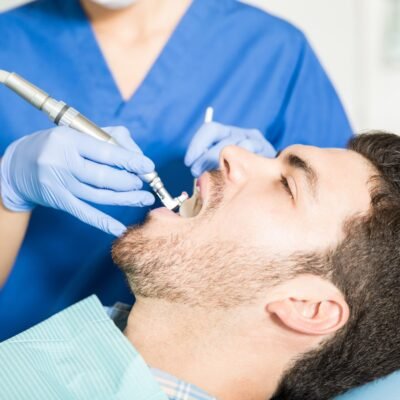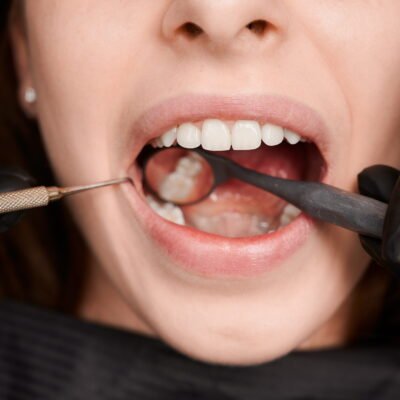





Have you ever needed a dental crown and dreaded the idea of multiple visits, messy impressions, and weeks of waiting? CEREC technology changes all of that. Two types of dental technology are mostly used in CEREC dental treatment, CAD and CAM (Computer Aided Design and Computer Aided Manufacturing). A dentist designs, creates, and places a permanent dental restoration, all in a single appointment. So, let us break down exactly what CEREC is, how it works, and whether it is right for you.
What Does CEREC Stand For?
CEREC stands for Chairside Economical Restoration of Esthetic Ceramics. It is a system that allows dentists to create, design and restore damaged teeth right at the dental chair, without sending impressions to an outside lab.
The technology was first developed in 1985 by prosthodontist Werner Mörmann and electrical engineer Marco Brandestini in Switzerland. Since then, it has evolved significantly. The latest version, CEREC 3, comes with an intraoral 3D camera and advanced design software. Over 30 million restorations have already been made using CEREC CAD/CAM technology, making CEREC dental technology one of the most widely trusted systems in modern restorative care.
How Does CEREC Technology Work?
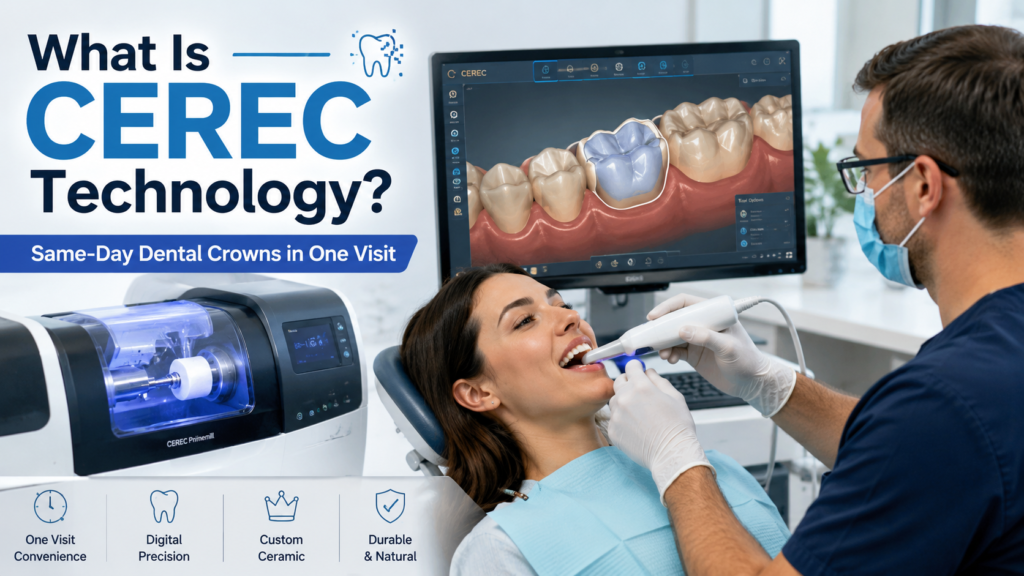
As I told you before, CEREC relies on two types of technologies: CAD (Computer-Aided Design) and CAM (Computer-Aided Manufacturing). They allow a dentist to go from a digital scan with a cerec 3d camera to finished restoration in about two hours.
Here is a step-by-step look at the process:
Step 1 — Digital Scanning: The dentist numbs and prepares the damaged tooth. Then, a small intraoral 3D camera scans the tooth and the surrounding area. No messy impression materials are needed.
Step 2 — Digital Design: The dentist uses specialized software to design a custom restoration on a computer screen. The design is customized to match your exact bite, tooth shape and size.
Step 3 — Milling: The design is sent to an in-office milling machine. The machine carves the restoration from a solid ceramic block in about 15–20 minutes.
Step 4 — Fitting & Bonding: The dentist checks the fit, makes any small adjustments, and then bonds the restoration permanently to your tooth. You leave with a finished, permanent CEREC tooth crown the same day.
What Can CEREC Technology Create?
CEREC is not limited to crowns alone. Professional CEREC dentists use it to create a wide range of restorations, including:
- Crowns: Protect damaged teeth and cover or repair decayed teeth
- Inlays and Onlays: To restore partially damaged teeth with a custom-fitted piece
- Veneers: Thin ceramic shells bonded to the front of teeth to improve appearance
- Fixed Bridges: To replace one or more missing teeth
- Dental Implant components: To complete implant restorations
- Partial Dentures: For replacing multiple missing teeth
Among these, cerec crowns remain the most commonly requested restoration, since they combine strength, natural appearance, and same-day convenience.
CEREC Technology: Pros and Cons
| Pros | Cons |
| Same-day restoration — no return visits | Not all dental offices have CEREC equipment |
| No messy traditional impressions | May cost slightly more than traditional methods |
| No temporary crowns needed | Color matching depends on dentist’s skill and experience |
| Highly accurate fit using 3D scanning | Not ideal for very deep cracks extending below the gumline |
| Natural-looking, metal-free ceramic material | Ceramic can wear faster than metal crowns on back teeth |
| Dentist controls the entire process in-house | Limited to all-ceramic material options |
| Reduces dental anxiety by cutting total chair time | Requires specialized training — not every dentist is certified |
| Strong survival rate: 94.7% at 5 years, 85.7% at 10 years | May not suit complex reconstructions or full-mouth cases |
How CEREC Can Help You
Understanding the full range of CEREC technology benefits can help you decide whether it’s the right choice for your next restoration.
1. Same-day convenience
Permanent restoration is placed in one appointment. No return visits, no waiting weeks for a lab result.
2. Natural appearance
Milled from a single high-quality ceramic block and color-matched to your surrounding teeth. Metal-free.
3. Digital precision
CAD/CAM software maps your mouth in 3D for a highly accurate fit — reducing the risk of gaps and future decay.
4. Save Time
People with demanding work schedules, young children, or long commutes find CEREC especially valuable. A traditional crown process can require two days off work. CEREC cuts that to one short appointment. For many patients, the time savings alone justify the choice.
5. Reduce Dental Anxiety
Many patients feel anxious about dental visits. Fewer appointments mean less time in the dental chair overall. CEREC helps people with dental anxiety complete their treatment faster and with less stress.
What Materials Does CEREC Use?
That is the main point, before getting CEREC dental treatment, you should must know which type of material CEREC uses for tooth restorations. CEREC treatment is safe, effective and excellent. They are made from high-quality ceramic blocks. The two most common materials are:
Zirconia: Zirconia is extremely strong and durable. Zirconia is perfect for back teeth where biting forces are more than the first one. It resists wear and abrasion very well. Studies show zirconia crowns can match or exceed traditional porcelain-fused-to-metal (PFM) crowns in strength.
Lithium Disilicate: Lithium Disilicate is also a strong ceramic material it is also known for excellent aesthetics. It is slightly more translucent than zirconia and it is a popular choice for front teeth where appearance matters most.
Both materials are completely metal-free, making CEREC dental restorations a great option for patients with metal sensitivities.
How Much Does CEREC Cost Per Tooth?
CEREC costs depend on your location, the dentist’s experience, and the type of restoration needed. For example, if you live in Los Angeles, the cost is between $1000 to $2500 and the dentist also matters, if the dentist is experienced, it is possible they charge a little higher. Here is a general breakdown:
| Situation | Estimated Cost Per Tooth |
| Without dental insurance | $1,000 – $2,500 (average: ~$1,600) |
| With dental insurance | $300 – $1,000 per tooth (average: ~$600 to $1,200) |
| General national average (crown) | $1,000 – $2,500 |
| Veneers (CEREC) | Up to $1,200 to $1,600 per tooth |
CEREC vs. Traditional Crowns:
| Feature | CEREC | Traditional Crown |
| Number of visits | 1 | 2 or more |
| Time to complete | ~2 hours | 1–3 weeks |
| Temporary crown needed | No | Yes |
| Impression type | Digital 3D scan | Physical impression |
| Material options | Ceramic only | Ceramic, metal, PFM |
| Color customization | Good | Excellent (lab-matched) |
| Cost | Slightly higher | Slightly lower |
| Availability | Not universal | Widely available |
How to Find a CEREC Dentist Near You
CEREC technology is becoming more common, but not every cerec technology office offers it. The best option is to search online or if your online experience was not good, then ask your friend or current dentist directly if they have CEREC equipment and the training to use it. If he refuses, then ask if there is any friend dentist who is professional and experienced.
When you find a CEREC provider, ask them:
- How many CEREC restorations have you placed?
- Do you offer a warranty on CEREC work?
- What ceramic materials do you use?
Conclusion
CEREC technology is one of the most advanced technologies in modern dentistry. It gives patients a faster, more comfortable, and equally durable alternative to traditional dental restorations. A single visit replaces what once took weeks. No temporary crowns, no messy impressions, no repeated numbing. Talk to your dentist to find out if CEREC is right for your specific situation. Your smile is worth it and now, you do not have to wait weeks to get it back.

Other Articles

Swollen Cheek 3 Weeks After Wisdom Teeth Removal
What to Eat After Wisdom Teeth Removal?