




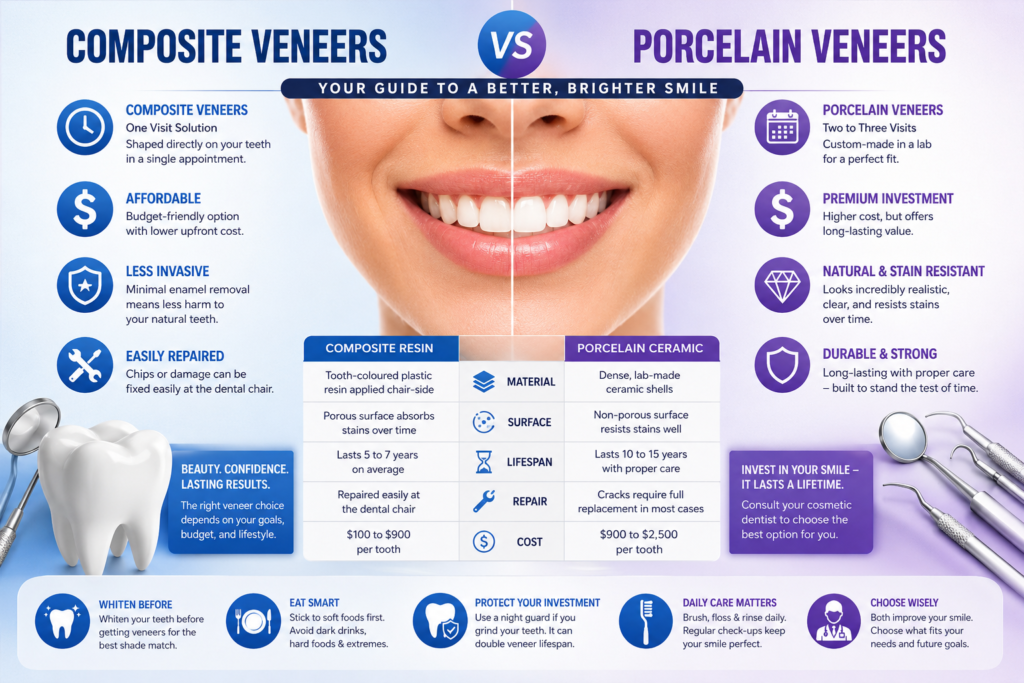
Composite veneers are shaped right onto your teeth in just one visit, which makes them a cheap, easily repairable option and less harmful. Porcelain veneers, on the other hand, are made to order in a lab and require two to three visits. Porcelain is more expensive, but it looks very realistic, is clear, and doesn’t color easily.
Cosmetic dentistry is one of the fastest-growing healthcare sectors worldwide. A 2023 report by the American Academy of Cosmetic Dentistry found that smile improvement procedures rose by over 30% in the last five years. So you are not alone in wanting a brighter, more confident smile.
What Are Composite Veneers?
When you put composite veneers on the front of your teeth, they are thin, custom-shaped shells of tooth-colored plastic material. They are a cheap, slightly invasive way to improve the look of your teeth by covering up stains, fixing chips, filling in small gaps, and changing the shape of your teeth to make your smile better.
Composite veneers come from a tooth-coloured resin material. Your dentist applies the resin directly onto your tooth surface. A special light then hardens the material in layers. Finally, the dentist shapes and polishes it to match your natural teeth.
What Are Porcelain Veneers?
Porcelain veneers are very thin, medical-grade ceramic shells that are attached permanently to the front of your teeth. They are a common way for cosmetic dentists to fix problems with your smile right away, like slight misalignments, chips, discoloration and small gaps.
The process takes two or more visits. You wait between visits while the lab completes the shells. Porcelain carries a natural translucency that closely matches real tooth enamel. That quality gives porcelain veneers a lifelike appearance that most people find hard to beat.
How Do the Two Materials Actually Differ?
You might wonder why the material matters so much. It matters because material drives every other factor: cost, durability, appearance and care. Here is a clear side-by-side look.
Composite Resin
- Tooth-coloured plastic resin applied chair-side
- Porous surface absorbs stains over time
- Lasts 5 to 7 years on average
- Repaired easily at the dental chair
- Costs between $100 to $900 per tooth
Porcelain Ceramic
- Dense, lab-made ceramic shells
- Non-porous surface resists stains well
- Lasts 10 to 15 years with proper care
- Cracks require full replacement in most cases
- Costs between $900 and $2,500 per tooth (according to cost data verified by the American Dental Association)
Which Type Looks More Natural on Your Teeth?
Appearance matters a lot to most veneer patients. Porcelain carries a light-reflecting quality that mirrors real tooth enamel. Dentists call this translucency. It makes porcelain veneers nearly indistinguishable from natural teeth in most lighting conditions.
Composite resin lacks that same depth of translucency. It can still produce a very attractive result. A skilled dentist layers the resin carefully to mimic natural depth. But under close inspection or bright light, composite can sometimes look slightly flat compared to porcelain.
What Does the Procedure Feel Like for Each Type?
A composite procedure feels like a regular dental appointment. Your dentist cleans the tooth, applies a mild acid to roughen the surface, and then layers the resin. You may feel mild sensitivity during the process. Most patients report little to no discomfort.
A porcelain procedure involves more steps. Your dentist numbs the area before removing enamel. You may wear temporary veneers between the two appointments. Temporary veneers can feel slightly rough or bulky. Some patients notice heightened sensitivity to cold or heat during that waiting period.
How Long Does Sensitivity Last After Each Procedure?
After composite veneers, sensitivity usually fades within 24 to 48 hours. You may feel a sharp reaction to cold drinks on the first day. You should avoid very hot or very cold food for two to three days. The sensitivity rarely lasts beyond a week.
After porcelain veneers, sensitivity can last slightly longer. You removed enamel in the prep step, so the tooth is more exposed. Most patients report sensitivity for three to seven days. A small number of patients experience sensitivity for up to two weeks. Your dentist can recommend a sensitivity toothpaste to help during that period.
You should contact your dentist if sensitivity lasts beyond three weeks. Prolonged sensitivity may signal an underlying issue that needs attention.
What Should You Eat and Avoid After Getting Veneers?
No competitor article covers this topic well. But it matters for your long-term results.
First 48 hours after placement:
- You should stick to soft foods like yogurt, mashed potatoes, and soup
- You should avoid biting into hard fruits or raw vegetables
- You should skip coffee, tea, and red wine for at least 48 hours
- You should avoid very hot or very cold beverages
Long-term diet habits for composite veneers:
- You should limit coffee, tea, and red wine on a regular basis
- You should use a straw for dark-coloured drinks to reduce direct contact
- You should avoid biting nails, pen caps, or hard candy
- You should not use your teeth to open packaging
Long-term diet habits for porcelain veneers:
- You should still limit dark-coloured beverages to protect the bonding cement
- You should avoid biting directly into very hard foods like raw apples or crusty bread
- You should cut hard foods into smaller pieces before chewing
Does Teeth Grinding Affect Your Veneer Choice?
You should pay close attention here, especially if you grind your teeth at night. The dental term for tooth clenching and grinding is bruxism. It affects roughly 8 to 10 percent of adults worldwide, according to the National Sleep Foundation.
Bruxism puts excessive force on veneers. Composite resin can chip or crack under that pressure. Porcelain can fracture under repeated grinding stress too. No veneer type is fully immune to bruxism damage.
You should tell your dentist about grinding before you choose a veneer type. Your dentist may recommend a custom night guard to protect your investment. A night guard can double the effective lifespan of either type of veneer. You should factor the cost of a night guard into your total budget.
Should You Whiten Your Teeth Before Getting Veneers?
You should whiten your natural teeth before veneer placement, not after. Veneers do not respond to whitening treatments. Your dentist matches the veneer shade to your current tooth colour. So if you whiten after placement, your natural teeth lighten but your veneers stay the same shade. That mismatch becomes visible.
You should complete any teeth whitening at least two weeks before your veneer appointment. You need that time for the tooth colour to stabilise. A stable base shade helps your dentist match the veneers accurately. Everyhealthsolution always recommends discussing whitening plans with your dentist at the consultation stage.
How Does the Daily Care Routine Differ Between the Two?
You need a clear maintenance plan for each type. Most articles list vague tips. Everyhealthsolution gives you a proper daily routine.
Daily care for composite veneers:
- You should brush twice a day with a soft-bristle toothbrush
- You should use a non-abrasive, fluoride toothpaste
- You should floss once daily around the veneer edges
- You should rinse with an alcohol-free mouthwash
- You should avoid whitening toothpastes, which can scratch the resin surface
Daily care for porcelain veneers:
- You should follow the same brushing and flossing routine
- You should use non-abrasive toothpaste to protect the glaze
- You should visit your dentist every six months for professional polishing
- You should ask your dentist to check the bonding cement at each check-up
Both types benefit from regular dental visits. A professional clean every six months keeps both types looking their best.
Which one is good for you?
You should choose composite veneers if:
- Your budget is tight right now
- You want results from a single appointment
- You may want to change or remove the veneers later
- You have a minor cosmetic concern on one or two teeth
You should choose porcelain veneers if:
- You want the most natural-looking result possible
- You plan a full smile transformation across multiple teeth
- You want a long-term solution that resists staining
- You can invest more upfront for fewer replacements later
Both options improve your smile. The right choice depends on your health, budget, lifestyle, and long-term goals. You should always consult a qualified cosmetic dentist before making a final decision.
Final Thought:
A better smile starts with the right information. You now have everything you need to ask the right questions at your next dental consultation. You understand the materials, the procedures, the costs, the care, and the gaps that most articles never address.
Everyhealthsolution is here to guide you at every stage of your health journey. You deserve accurate, honest, and complete information. Take that first step with confidence.

Other Articles

10 Tips to Resolve Your Dry Mouth Issue
Swollen Cheek 3 Weeks After Wisdom Teeth Removal