




If you want to maintain a healthy smile, keeping your gums healthy and prevent cavities? Oral hygiene is the most important. Good oral hygiene helps get rid of germs, lowers plaque buildup, and makes breath smell better.
Mouthwash or oil pulling are both supplementary methods for cleaning your teeth, but they both work differently. Antiseptic mouthwash kills bacteria chemically in 30 to 60 seconds, while oil pulling kills bacteria in oil manually for 15 to 20 minutes.
What Is Oil Pulling?
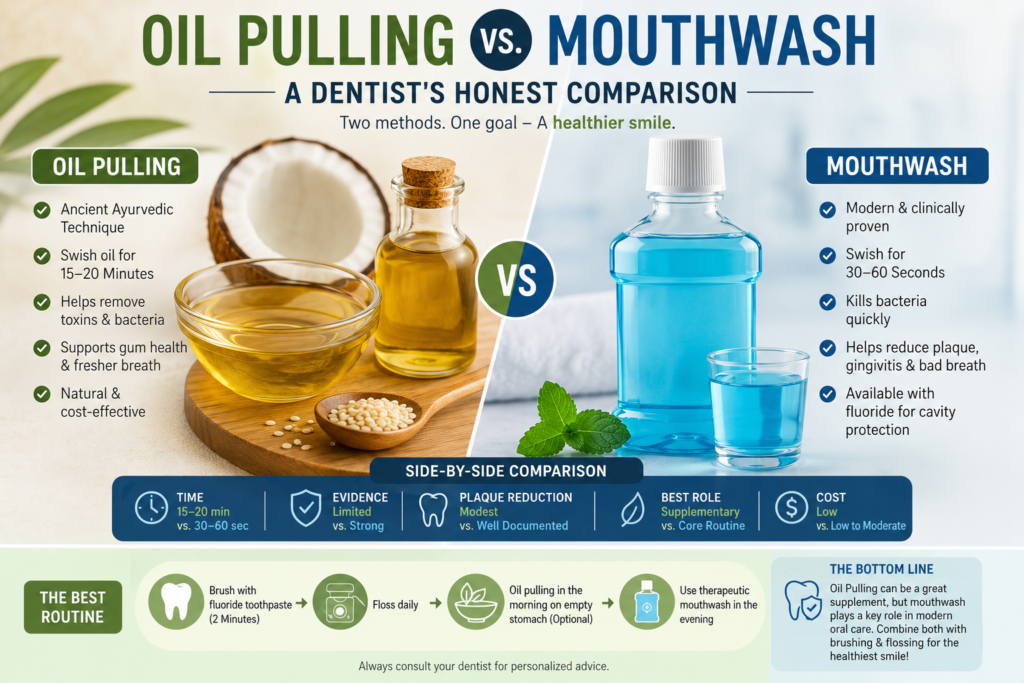
Oil pulling is an old Ayurvedic technique that involves rapidly swishing a spoonful of sunflower, coconut and sesame oil in your mouth for 15–20 minutes. The goal is to “pull” debris and germs from teeth and gums before spitting. Once you swish the oil, it will mix with saliva, trap bacteria and toxins, and activate enzymes in your gums. The oil should be spit out when it turns thin and milky white, which should happen after about 20 minutes.
What is Mouthwash?
Mouthwash, which is also called mouth rinse, is a liquid formula that you can hold in your hand and swish for 30 to 60 seconds around your mouth to get rid of bad breath, kill bacteria, and treat any other specific oral health problem. It comes in two broad categories. Cosmetic rinses mask odor and add flavor.
In mouthwash, there are some perfect ingredients like chlorhexidine, cetylpyridinium chloride, essential oils or fluoride. These ingredients play an important role; they affect plaque, gingivitis or cavities directly.
What Are the Benefits of Oil Pulling?
By getting rid of harmful bacteria, preventing plaque buildup and reducing gum inflammation, oil pulling makes your oral hygiene much better then before. This is an old method that comes from traditional Ayurvedic medicine. It involves swishing a tablespoon of edible oil (like sunflower, sesame, or coconut oil) you can apply it around your mouth for 10 to 20 minutes and then spitting it out. The best thing about oil pulling is it offers perfect oral hygiene support, dental groups stress that it should go along with regular brushing and cleaning, not replace them.
A report said if you regular users it gives you fresher breath, since swishing physically clears loose bacteria and food debris off the tongue and gum line. The habit costs almost nothing, needs no special equipment, and fits into a morning routine before you eat or drink anything.
What Are the Benefits of Mouthwash?
Mouthwash is a supplement, and it’s perfect to use after flossing & brushing because it cleans the areas where your toothbrush doesn’t reach. The benefits of mouthwash include reducing plaque & gingivitis in one to three weeks, killing bacteria that cause smell, protecting tooth enamel from decay by making it more stronger and it will remove small particles of food from the teeth.
Types of Oil Pulling
Three oils show up most often in practice and in trials.
- Coconut oil, prized for its lauric acid content and mild taste
- Sesame oil, the traditional Ayurvedic choice and the most studied option in clinical trials
- Sunflower oil, a light, budget-friendly alternative
Types of Mouthwash
Mouthwashes are come in 2 main categories: therapeutic and cosmetic. Therapeutic mouthwashes treat specific problems like cavities or plaque. On the other hand, cosmetic mouthwashes temporarily freshen your breath. There are some other common types like:
Alcohol-Free: Formulations that don’t contain alcohol are milder and use antibacterials like cetylpyridinium chloride (CPC) instead of ethanol. These are perfect for people who have dry mouths.
Sensitive Teeth: Treats sensitive teeth by blocking nerve pathways and protecting exposed dentin with potassium nitrate or other relaxing agents.
Whitening: To assist in minimizing surface discolouration, it contains peroxides or stain-lifting chemicals.
Fluoride: This substance has sodium fluoride in it to protect enamel and stop cavities from preventing.
Antibacterial/Antiseptic: This type of mouthwash contains chlorhexidine or important oils (like menthol or eucalyptol) to kill the germs and stop gum disease and plaque from getting worse.
Do Doctors Recommend Oil Pulling?
Many dentists treat it as an optional add-on, not a core treatment. The American Dental Association has stated that current evidence does not support oil pulling as a proven method for fighting cavities or gum disease on its own, and no major dental body has replaced brushing, flossing, or fluoride with it. Some dentists do encourage it for patients who want an extra, low-risk step in their routine, as long as brushing and flossing stay non-negotiable. In short, you can add it, but you should not swap it in for care your dentist already recommends.
Oil Pulling vs. Mouthwash: A Side-by-Side Look
| Factor | Oil Pulling | Mouthwash |
| Time per use | 15–20 minutes | 30–60 seconds |
| Evidence strength | Limited, small trials | Strong for therapeutic rinses |
| Plaque reduction | Modest, similar to a water rinse in some trials | Well documented, especially with chlorhexidine |
| Fluoride content | None | Available in many formulas |
| Common side effects | Upset stomach, rare aspiration risk | Dry mouth, staining, canker sores |
| Cost | Low, pantry oil | Low to moderate |
| Ease of daily use | Harder to sustain | Simple to fit into a routine |
| Best role | Supplementary habit | Core part of a hygiene routine |
Can You Use Oil Pulling and Mouthwash Together?
Yes, you can do both. Most of the time, using mouthwash right after oil pulling is not necessary, although both approaches are effective in reducing germs, it is essential to constantly follow up with brushing and flossing. A practical order looks like this.
- Brush for two minutes with fluoride toothpaste
- Floss to clear the spaces your brush misses
- Add oil pulling in the morning on an empty stomach, if you enjoy the ritual
- Finish your evening routine with a therapeutic mouthwash your dentist recommends
Skipping brushing and flossing in favor of just oil pulling leaves you without fluoride protection, and fluoride remains one of the best-documented tools against cavities.
Frequently Asked Questions
Does oil pulling whiten teeth?
No, unlike treatments based on oil pulling does not bleach enamel, which is how teeth whitening works. Having said that, it has the potential to lessen the amount of germs and plaque on the teeth’s surfaces, which might lead to a cleaner and somewhat brighter appearance. In terms of preventative dental care, the ADA does not support it.
How long before oil pulling shows results?
Many people say that oil pulling for 7 days makes their breath and mouth feel better. But according to studies, in reality, people see that it takes 4 to 8 weeks to see a real difference in how much plaque and gingivitis you have.
Is coconut oil better than sesame oil for pulling?
Most people think that coconut oil is better for oil pulling because it has more lauric acid, which is a powerful antibacterial and anti-inflammatory. If you want to use the traditional Ayurvedic way, sesame oil is still the best choice. Both are very good at getting rid of gingivitis and plaque as well.
Can oil pulling replace mouthwash completely?
Yes, oil pulling can be used regularly as a natural option. That being said, the American Dental Association (ADA) does not recommend it as a replacement for professional dental care. You should still brush your teeth twice a day and floss once a day because oil pulling can’t get rid of gunk between your teeth.

Other Articles

Is Coffee Bad for Your Teeth?