


As enamel wears away, the inner layer of your tooth becomes visible. This can make your teeth sensitive. This might hurt (pain) when you eat something hot, cold or sweet. It could also mean that you have Gum disease, Cavities, or a Cracked tooth. A dentist can help you figure out what’s wrong and make you feel better.
What are sensitive teeth?
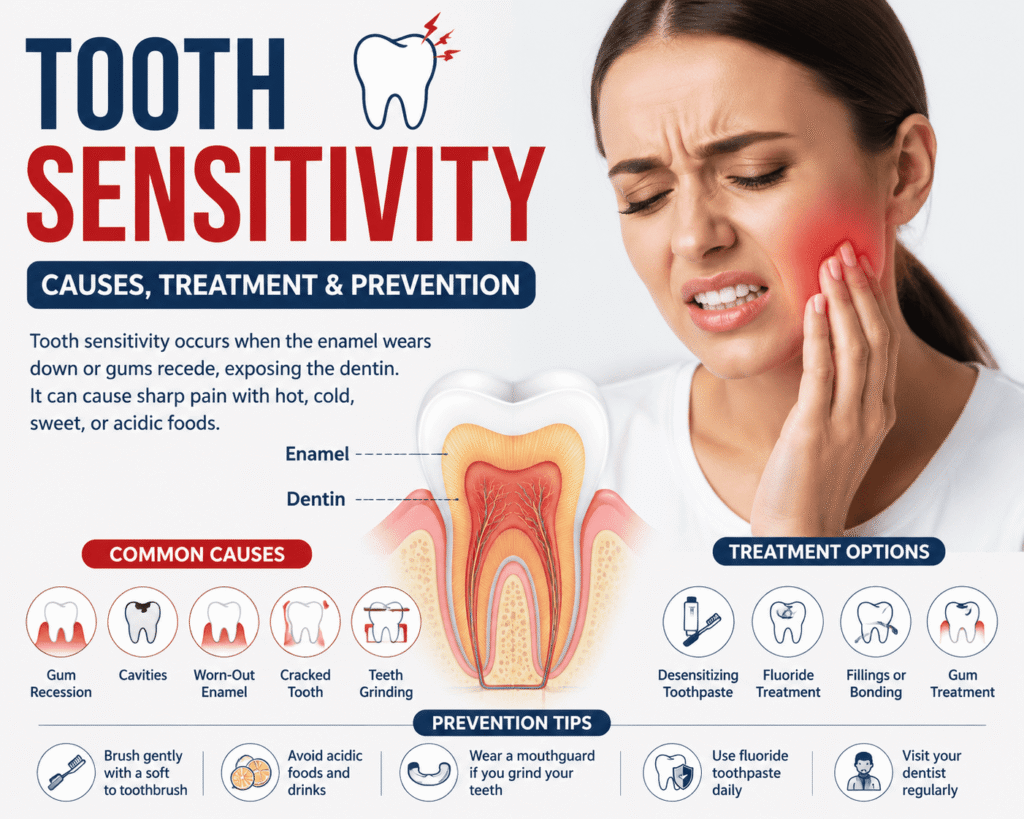
Sensitive Tooth (dentin hypersensitivity) it oocur when the outer layer of your teeth, which is also known as (enamel) wears down. It means that your teeth hurt or feel uncomfortable when you eat certain foods, like hot, cold, sour, or sweet ones, or even when you brush them.
It usually feels like a sharp, quick pain that comes and goes. This happens when the inner layer (Soft layer) of your tooth becomes exposed (called dentin). It is more sensitive.
Normally, your teeth are protected by enamel. When enamel becomes weak or the gums recede, the inner part of the tooth becomes more sensitive. The tooth pain is a sign of a bigger issue sometimes, for example, a cracked tooth, gum disease and cavity.
What causes tooth sensitivity?
Tooth sensitivity can happen for many reasons. The most common causes include:
1. Gum disease
When gums are infected or swollen, you can see the roots of teeth.
2. Age
With age, teeth often become more sensitive.
3. Dental treatments
Teeth can be sensitive for a short time after being cleaned, filled, or whitened.
4. Cracked or chipped teeth
If your tooth has a cracked or chip, germs will sneak in and create discomfort
5. Tooth decay or cavities
A cavity can create holes in the tooth, letting heat, cold, or sugar reach the nerves inside.
6. Teeth grinding (bruxism)
Grinding your teeth, especially at night, can wear them down over time.
7. Gum recession
When gums pull back, the root of the tooth gets exposed. This part is not protected like enamel, so it becomes sensitive.
8. Worn-out enamel
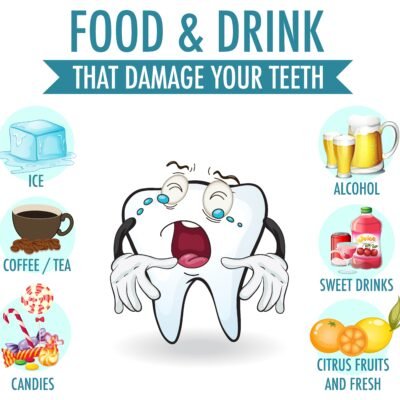
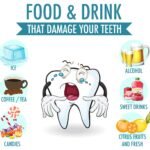
Brushing too hard, using a hard toothbrush, or eating too many acidic foods like Tea, pickles, tomatoes and Citrus fruits can slowly wear down the enamel.
9. Dental procedures
Cleaning, filling, teeth whitening, deep cleaning, and crowns & veneers can cause tooth sensitivity for a short time.
10. Poor oral hygiene
Grinding or clenching your teeth, day or night, can wear away the enamel and make your teeth more sensitive.
How to treat them?
Treatment depends on the cause, but most cases can be managed easily.
Use a desensitizing toothpaste
These toothpastes help block pain signals from the tooth to the nerve. You need to use them regularly.
Improve brushing habits
Use a soft toothbrush and brush gently. Avoid brushing too hard.
Fluoride treatment
Dentists may apply fluoride to strengthen weak enamel and reduce sensitivity.
Fillings or bonding
If there is a cavity or worn area, a filling can protect the tooth.
Gum treatment
If gum recession is the issue, your dentist may suggest special treatment to protect the exposed root.
How to stop them prevented?
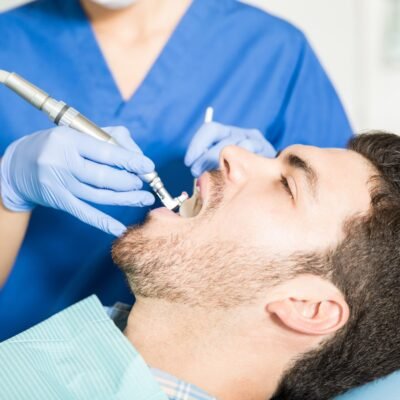
When you visit dentists for tooth treatment after this, your tooth sensitivity goes away on it own it own. Talk to your doctor if your teeth hurt when they touch something sweet, hot or cold. The doctor looks at what’s going on and prefers the best treatment. You can reduce or prevent tooth sensitivity by following simple habits:
- Brush your teeth with a soft toothbrush 2 times a day.
- Dental bonding and sealants
- Do not eat acidic foods like Tea, pickles, tomatoes, Citrus fruits and soda
- Do not brush too hard
- Wear a mouthguard if you grind your teeth at night
- Visit your dentist regularly
- Use fluoride toothpaste or fluoride mouthwash daily
When should you go to the doctor?
When you are eating hot, cold, sour, and sweet, and your teeth hurt, go to the doctor. In some cases, it is possible your dentist may recommend some treatment like dental bonding, dental sealants, and fluoride applications for your teeth protection. If your pain is getting worse and does not improve after 1 to 2 weeks, you feel pain in one tooth, you feel swelling, pus and bleeding gums, or you have trouble eating or drinking. If you see any of these signs, you need to visit a doctor ASAP. Ignoring sensitivity for too long can lead to bigger dental problems, so early checkups are always better.

5 Types of Dental Fillings
Oral-B iO Series 10 vs Usmile Y10 PRO Review (2026)