





When a tooth has a cavity or minor damage, a dental filling is one of the most common ways to fix it. Millions of Americans get fillings every year. Knowing your options helps you make smart choices about your oral health.
What Are Dental Fillings?
A dental filling is a material a dentist uses to repair a tooth that has been damaged by decay, a crack, or wear. Think of it like patching a hole in a wall, the filling fills in the damaged area so the tooth can work normally again.
When bacteria eat away at the outer layer of a tooth (called enamel), a hole called a cavity forms. If left alone, that hole gets bigger and can cause pain or even tooth loss. A dentist removes the decayed part and fills the space with a special material.
Fillings are also used for:
- Cracked or chipped teeth
- Worn-down teeth from grinding
- Broken teeth
There are five main types of dental fillings used today. Each one has pros and cons, and your dentist will help you decide which one fits your needs.
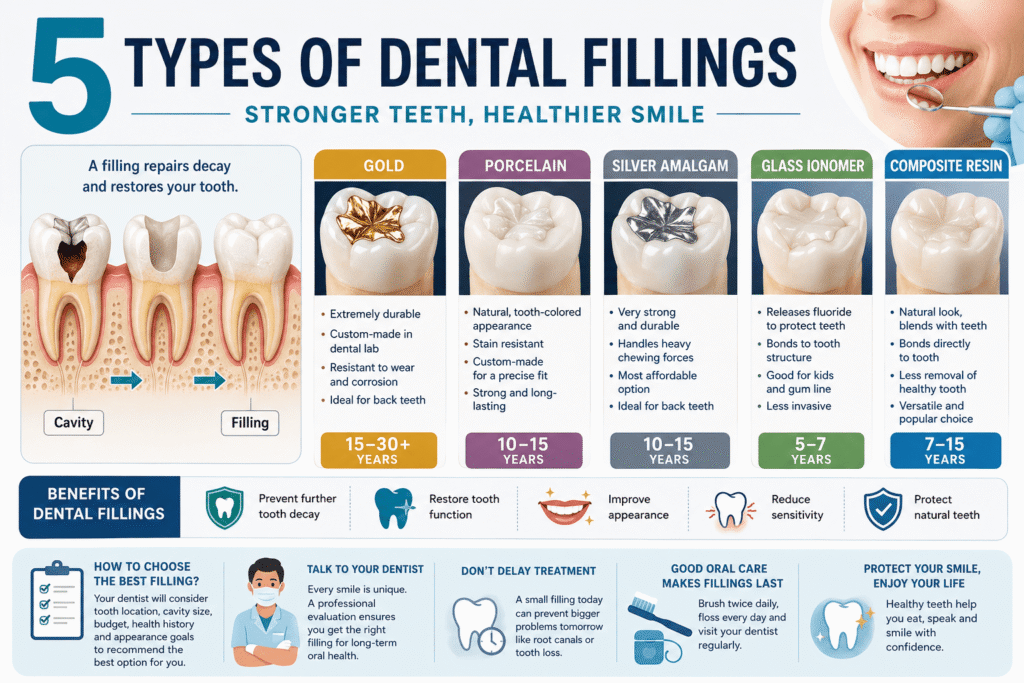
Gold Fillings
Gold fillings are made from a mixture of gold, copper and other metals. They are not placed directly into the tooth like other types. Instead, a dental lab custom-makes the piece, and your dentist cements it in place at a second visit.
Because of this, gold fillings usually take two appointments. Gold has been used in dentistry for more than a century. It does not rust or break down in the mouth. Many dentists accept that gold is the most durable filling material. It can last 15 to 30 years or more, depending on the care. It is not recommended for those teeth that are visible when you smile.
Porcelain Fillings
Porcelain fillings, also known as (ceramic fillings, onlays or inlays), are tooth-colored restorations made from a mixture of minerals including quartz, feldspar and kaolin. Like gold fillings, most porcelain restorations are made in a dental lab and require two visits. However, some dental offices use same-day CAD/CAM technology (a digital scanner and milling machine) to create and place porcelain restorations in a single appointment. When you are doing this treatment, it looks real. It can last more than 10 to 15 years, sometimes more, but with proper care.
Silver Amalgam Fillings
Silver amalgam is the classic filling material and the most common dental filling type used for over 150 years. It is made by mixing liquid mercury with a powdered alloy of silver, tin, zinc and copper. The resulting material is placed directly into the tooth and hardens within minutes. The American Dental Association (ADA), the FDA, and major public health organizations consider amalgam safe for most adults.
However, the FDA has updated its guidance to recommend that certain groups avoid amalgam when possible. These include pregnant women, women planning to become pregnant, breastfeeding mothers, children under 6, and people with kidney problems or neurological conditions such as Alzheimer’s or multiple sclerosis. Amalgam is durable and handles heavy chewing forces very well. It is one of the least expensive filling materials available, making it a practical choice for patients without dental insurance. It typically lasts 10 to 15 years and it’s perfect for back teeth.
Glass Ionomer Fillings
Glass ionomer is a tooth-colored filling made from a blend of silica glass powder and an acrylic resin. What makes it unique is that it actually releases small amounts of fluoride over time, which helps protect the surrounding tooth from further decay. It also bonds chemically to the tooth surface without always requiring extensive drilling. Glass ionomer is particularly well-suited for children because it is gentler on young tooth structure and offers ongoing fluoride protection during cavity-prone years.
It also works well near the gum line, where tooth surfaces are more vulnerable to root decay, especially in older adults. Dentists sometimes use glass ionomer as a temporary filling or as a base layer beneath a composite filling for added protection. Glass ionomer is not as hard as composite resin or amalgam. It is very good for Baby teeth, small fillings near the gum line and patients at high risk of further tooth decay. It can last 5 to 7 years.
Composite Resin Fillings
Composite resin is a tooth-colored material made from a blend of plastic resin and fine glass or silica particles. It is the most commonly used filling type in the US today. Unlike gold and porcelain, composite is placed and shaped directly in the tooth during a single visit, then hardened using a special blue curing light. Composite fillings blend naturally with your teeth. Most people cannot tell that a composite filling is there.
Because the material bonds directly to the tooth structure, dentists can often remove less of the healthy tooth compared to amalgam, which is a real advantage for long-term dental health. With proper care, it can last 7 to 15 years. The resin composite is good for front teeth, visible areas, small to medium cavities in back teeth and patients who want a natural look.
Comparison Table: All 5 Types of Dental Fillings
| Filling Type | Color | Strength | Lifespan | Cost (per tooth) | Best For |
| Gold | Gold | Very High | 15–30+ years | $250–$4,500 | Back molars |
| Porcelain / Ceramic | Tooth-colored | High | 10–15 years | $300–$4,500 | Visible back teeth |
| Silver Amalgam | Silver/Gray | Very High | 10–15 years | $50–$300 | Back molars, budget use |
| Glass Ionomer | Tooth-colored | Low–Medium | 5–7 years | $100–$300 | Baby teeth, gum line |
| Composite Resin | Tooth-colored | Medium–High | 7–15 years | $150–$300 | Front teeth, visible areas |
What Are the Benefits of Dental Fillings?
Getting a dental filling is about just fixing a cavity. Here is what fillings do for your overall dental health:
Prevent further tooth decay. Once the decayed portion is removed and the tooth is filled, bacteria cannot continue eating away at that spot. The filling seals the tooth from further damage.
Restore tooth function. A tooth with a cavity or crack may make it painful to chew, bite or even talk normally. A filling brings the tooth back to its normal shape so you can eat and speak comfortably.
Improve appearance. Tooth-colored fillings (composite resin, porcelain, glass ionomer) blend in with your natural teeth. Nobody needs to know you have a filling.
Reduce sensitivity. Exposed tooth structure caused by decay or cracks often leads to sensitivity when eating hot, cold or sweet foods. A filling covers that exposed area and reduces discomfort.
Protect natural teeth. Saving a tooth with a filling is far better than losing it entirely. Keeping your natural teeth helps with chewing, speaking and supporting neighboring teeth.
How to Find the Best Filling Solution?
Find a perfect dental filling solution depending on the aesthetic goals, place of cavities, and most important point budgtet. If you coordinate with the dentist, who is a good option, he will consider a few things before recommending a filling material. Here is how the decision is usually made:
Location of the tooth. Front teeth are visible, so tooth-colored composite or porcelain is usually preferred. Back teeth need strength, so gold or amalgam may be suggested.
Size of the cavity. Small cavities are usually filled with composite resin or glass ionomer. Large cavities may need stronger materials like gold or amalgam.
Your budget. Amalgam is the most affordable option. If you do not have insurance and cost is a concern, your dentist can work with you to find a solution.
Your health history. People with mercury allergies, pregnant women, or young children may not be good candidates for amalgam fillings. Your dentist will ask about your health history before recommending any material.
Appearance preferences. If you care about a natural look, tooth-colored options work well. If durability is your top priority and the tooth is not visible, amalgam or gold may serve you better.
The best approach is to have an open conversation with your dentist. They can look at the tooth directly and give you a clear recommendation based on your specific situation.
Conclusion
Dental fillings are a safe, routine and effective way to protect your teeth from more damage. Whether you choose gold for its durability, porcelain for its natural look, amalgam for its affordability, glass ionomer for its fluoride benefits or composite resin for its versatility, each type has a place depending on your needs.
The most important thing is not to delay treatment. If you feel any pain, swelling, or discomfort, contact a dentist. The longer a cavity goes unfilled, the bigger and more costly the problem gets. Talk to your dentist about which filling fits your tooth, your health and your budget. A small filling today can save you from a root canal or tooth loss later.
FAQ
Which Kind of Filling Is Best?
Gold is the perfect material for fillings because it lasts the longest. Usually, gold fillings last between 15 to 30 years, and sometimes longer, if you take care of your teeth properly.
Can I Eat After a Filling?
Yes, you can eat after a filling treatment, but the exact time depends on the material you choose. If you have a silver amalgam filling, dentists usually recommend you wait 24 hours until the material has time to harden completely. If you have a composite (white) filling, you can eat once the numbness goes away, which usually takes one to two hours.
How much do 4 fillings cost?
If you don’t have insurance, getting four fillings can cost from $90 to $450 per tooth, or $360 to $1,800 for all four. It depends on the size of the hole and the material you choose.

Other Articles

What to Eat After Wisdom Teeth Removal?
Why are my teeth so sensitive & How to stop it?