



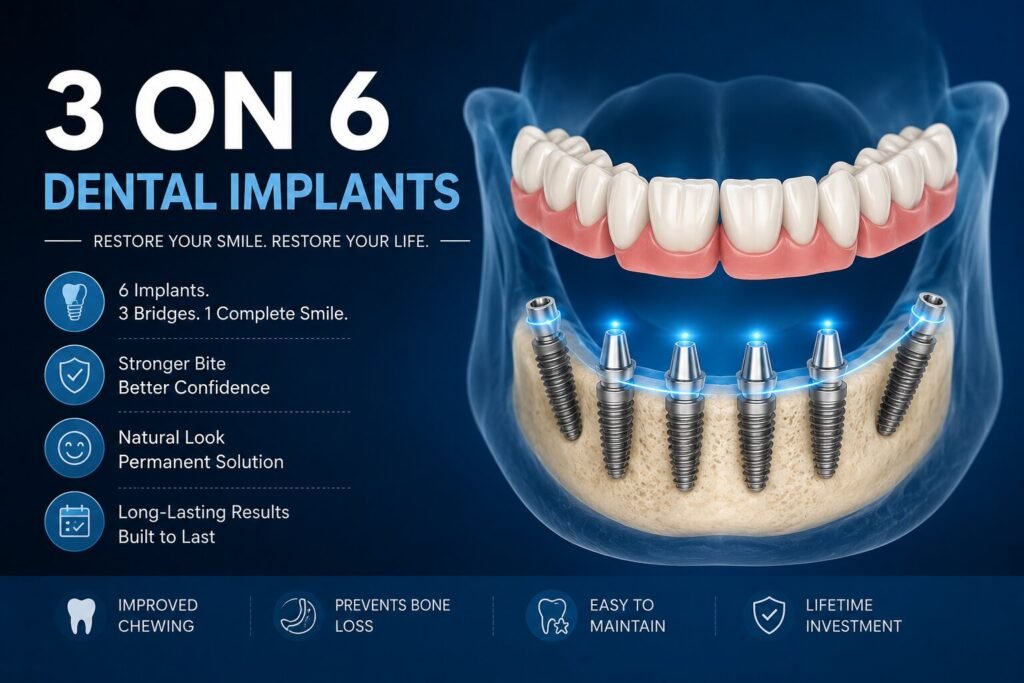
A 3 on 6 dental implant is a full-arch tooth replacement system. It uses six implants to support three separate bridges across your upper or lower jaw. Each bridge covers a section of your mouth, and together, they replace an entire row of teeth.
You get a permanent solution here, not a removable one. The implants act as new tooth roots. Your dentist places six titanium posts into your jawbone, and over time, your bone fuses to them. Dentists call this step osseointegration. It gives your new teeth a strong, stable base.
How does it work?
During the process, your arch is split into three parts: the left, the center, and the right. Each part has a special bridge that is attached to two different implants. This spreads your biting force equally across the six implants.
A traditional denture works differently. It sits on your gums and relies on suction or adhesive to stay put. It can slip when you talk and eat. 3 on 6 implants stay fixed in place, so you get a bite that feels close to natural teeth.
What Happens During the 3 on 6 Procedure?
Your 3 on 6 journey moves through four clear stages. Each stage builds toward your final, permanent smile.
Consultation and imaging: The dentist starts with a full exam. X-rays or 3D scans check the bone density and jaw structure. The scans show your dentist where to put the implants before surgery and let you know if 3 on 6 sounds good for you.
Surgery day: The surgeon places six titanium implants into your jawbone under local anesthesia. General anesthesia is also an option, and you can discuss it with your surgical team beforehand. You leave this visit with temporary teeth attached, so your smile stays intact from day one.
Healing and bone fusion: The jawbone fuses to the implants over the following months. Dentists call this process osseointegration, and it builds the strong foundation your final bridges need. Removable temporary dentures protect your appearance and function during this stretch.
Final bridges: Once your mouth heals fully, your dentist attaches three custom bridges to the implants. Every bridge replaces a section of your arch, and together, they restore full function and a natural look. Most patients need 1 to 2 weeks to adjust before a final fitting confirms everything feels right.
What Does Recovery Look Like, Week by Week?
Recovery follows a fairly predictable path for most patients. Your exact timeline still depends on your health, your bone quality, and how closely you follow aftercare instructions.
Week 1: Swelling & tenderness peak in the first few days after surgery. Soft foods work best now, and cold compresses help manage swelling. Your dentist gives clear care instructions before you leave the office.
Week 2 to 3: Discomfort fades steadily during this window. Your gums start to settle around the implants and you can slowly add more textures back into your diet. Follow-up visits confirm your recovery stays on track.
Month 1 to 3: Bone fusion continues quietly beneath the surface. Your jawbone builds new bone around each implant, and this bond grows stronger with every passing week. Most patients feel back to their normal daily routine well before this stage ends.
Months 3 to 6: The dentist confirms the implants have fully fused with your bone. The dentist then takes final impressions for your custom bridges. Confirmed integration clears the way for your last and most exciting appointment.
How Much Do 3 on 6 Dental Implants Cost in 2026?
In 2024, 3 on 6 dental implants will likely cost between $22,000 and $28,000 per arch. A full-mouth restoration, which includes both the upper or lower arches, will likely cost between $44,000 to $56,000. Some big financial and healthcare studies, on the other hand, show that national averages for standard, straightforward cases can start as low as $12,474 per arch.
In 2025 it cost around $20,000 to $35,000 per arch (upper or lower jaw) is the typical price range for 3 on 6 dental implants in the US. A full-mouth restoration, including both arches, can cost anywhere from $44,000 to $58,400.
In 2026, the cost of a (lower or upper jaw) in the USA is around $22,000 to $28,000 per arch. A full mouth restoration, including both arches, can cost anywhere from $44,000 to $56,000 on average.
Before treatment, you should get a written quote. A detailed breakdown protects you from surprise charges and helps you compare providers fairly. You should ask your dentist for a full explanation of every line item on your treatment plan.
Does Dental Insurance Cover 3 on 6 Implants?
Most dental insurance plans stop short of full implant coverage. Full-arch procedures like 3 on 6 often depend on the treatment plans, and many insurers still treat the treatment as an elective, cosmetic choice. Other full plans may charge from 10% to 50% of the charges until you reach your yearly cap. X-rays, extractions, or even the posts themselves could be part of this.
Partial coverage happens more often than full coverage. Your plan might cover diagnostic X-rays, initial consultations, or extractions related to your treatment. It rarely covers the implants themselves or the final bridges.
You should contact your insurance provider before the treatment starts. You should ask about your annual maximum, your waiting periods, and any exclusions tied to implant-based procedures. A quick call now saves you from confusion later.
Financing options fill the gap for many patients. Dental credit cards, in-house payment plans, and medical financing companies all help spread the cost over time. Your dental office can walk you through which option fits your budget best.
What Are the Benefits of Choosing 3 on 6?
3 on 6 implants bring real, lasting advantages over dentures and other implant systems. Here are the benefits patients notice most.
- A natural look, since no artificial gum material sits above your teeth
- Stable, fixed bridges that never slip or shift during meals
- Better chewing power compared to traditional dentures
- Easier daily care, since you brush and floss like natural teeth
- Bone maintenance because the implants work with your mouth like natural roots did to keep it strong.
- Long-term confidence in your smile and your bite
You get more than a cosmetic fix here. Research backs up the functional gains too. Studies on implant-supported restorations show they help preserve jawbone density over time, unlike dentures, which can speed up bone loss. Your quality of life often improves in ways that go beyond appearance, from clearer speech to a wider range of foods you can enjoy again.
What Risks or Side Effects Should You Know About?
Every surgical procedure has some risk, some have little risk and some have big risks, and 3-on-6 implants are no exception. Some side effects are minor and only last a brief period of time.
Some of the most common side effects are pain around the implant site, face and gum swelling, and light bleeding in the first few days. Bruising sometimes shows up near the surgical area too. Swelling and soreness usually fade within one to two weeks.
These are rare cases, but more serious complications can occur. Infection at the implant site brings swelling, pus, or persistent pain and it needs prompt attention from your dentist. Nerve damage, sinus issues, and implant failure happen far less often, but you should still understand these risks before your surgery date.
Gum recession shows up occasionally too. Your gums can pull back from the implant over time. Part of the post may then show through, and the area often grows more sensitive as a result. Your dentist will also notice this during follow-up visits and do something hurry if any signs show up.
If you choose a professional and experienced surgeon, then it has a low risk. Before choosing the dentist, do a little bit of research, check the background history of the clinic, technology reviews and before-and-after images also.
How Long Do 3 on 6 Implants Last?
3 on 6 implants are designed to last a lifetime, but with proper care. Many patients keep their original implants for 20 to 30+ years , and some go a lifetime without needing implant replacement.
The bridges themselves may need attention sooner. Bridges typically last 10 to 15 years before wear, chips, or shifts in your bite call for a replacement or an adjustment. Regular checkups catch these issues early, long before they turn into bigger problems.
Your daily habits matter more than almost any other factor. You should brush and floss around your bridges every day, and keep up with professional cleanings twice a year. You should avoid teeth grinding at night, and wear a night guard if your dentist recommends one.
Your bite and jaw health both play a role in long-term success. Bone density that stays strong supports your implants for the long run, while shifts in your overall health, like uncontrolled diabetes or osteoporosis, can affect how well your implants hold up.

Other Articles