


Orthodontic technology trends 2026 aim to improve accuracy, comfort, and patient understanding. Orthodontists are enhancing care experiences right from the first consultation. They speed up diagnoses. They keep digital records tidy. They improve aligner planning. They also offer more personalized treatments. At One Orthodontics, we introduce changes carefully. The Latest dental technology innovations orthodontics support clinical judgment rather than replacing it. Digital scans, photos, and bite data help the team see each smile better. Advanced software also aids in safe treatment planning and clearer progress reviews. New tools help reduce messy impressions. They improve communication and make treatment explanations clearer for patients and families. These advances help providers plan better. They can monitor progress with confidence and focus on long-term smile stability in care.
How Is AI Supporting Orthodontic Planning?
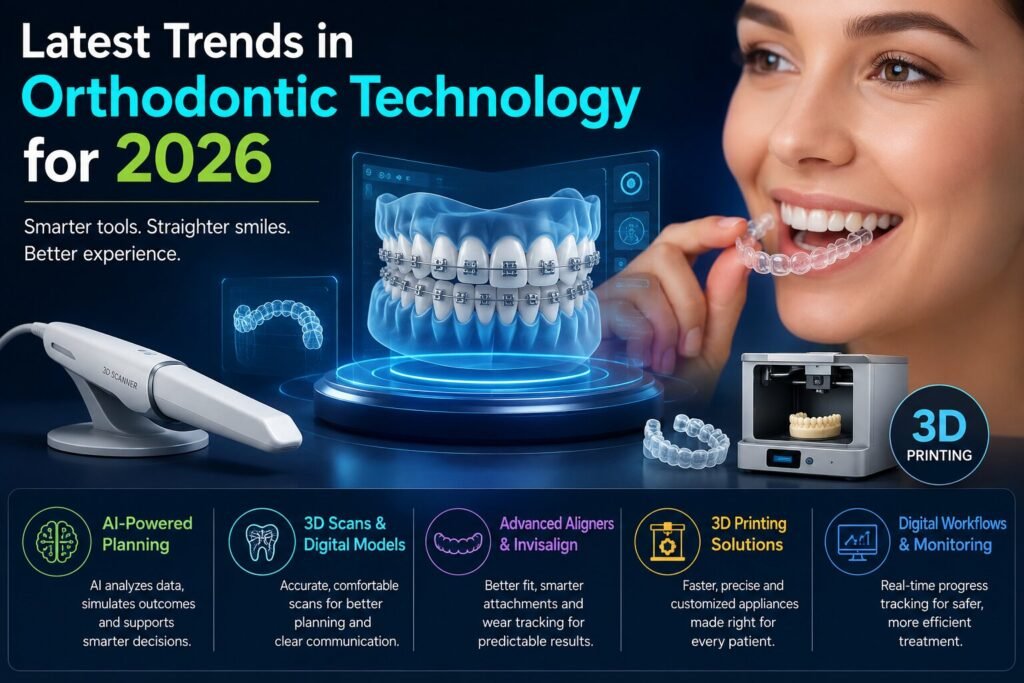
Within the year, AI in orthodontics 2026 moves from a popular word to a real help for medical professionals. Modern technology supports the study of medical images and the arrangement of patient records. Many experts claim that AI in orthodontics suggests ways for teeth to move and looks at the change in the mouth. Every choice is reviewed by the medical professional before the start of the clinical process. Because AI in orthodontics gives support, the final decision stays with the specialist.
- Case analysis: Technical AI tools find crowding, spacing, and tooth positions with high speed. It has been observed that AI in orthodontics shows how teeth are placed and how the jaw closes.
- Treatment simulation: Advanced digital models show a picture of tooth movement before the use of dental hardware. Because these pictures exist, the person sees the future result while the process starts.
- Progress review: Electronic image comparison tools find slow movement or problems when the teeth do not follow the plan. Since the software looks at old and new pictures, AI in orthodontics shows if the clinical process needs a change.
- Workflow support: Medical data that is organized well makes the preparation for cases faster. Repetitive steps are reduced because AI in orthodontics handles the hard parts of the working process.
Regarding the value, AI in orthodontics is seen in how the software gives advice rather than doing the work alone. Many people believe that the machine is only a helper for the human eye. Patients should know that a medical professional looks at every result and makes the final choice.
Why Are 3D Scans Becoming Standard?
Digital orthodontics and 3D scanning are becoming more popular. This is because the procedures are cleaner, faster, and simpler for many people seeking treatment. Experts say intraoral scanners create digital tooth models. These models aid in arranging teeth and sharing information, replacing traditional dental impressions. Patient history is documented accurately when digital orthodontics and 3D scanning trends are used.
- Better experience: Digital scans offer high comfort levels. They avoid sticky substances, helping anxious patients feel more relaxed during treatment. It has been observed that the absence of physical material in the mouth reduces the stress of the medical procedure.
- Accurate models: Scanning tooth surfaces makes better orthodontic brackets, clear trays, stabilizing devices, and more. Many people believe that the precision of these models ensures that the final tools fit the mouth perfectly.
- Clear visuals: In meetings, we display occlusal issues and treatment goals on screens. This way, individuals seeking treatment can see them clearly. It has been noted that because the images are visible on-screen, the logic of the dental movement is understood easily by the person.
- Retainer readiness: We can make replacement dental devices when teeth are stable. This is possible because we keep the original records. Medical professionals suggest that having a digital copy prevents the need for new impressions if a device is lost.
Records are created by scanning. This allows them to be sent to dental labs or used later for stabilizing dental devices. Using digital orthodontics and 3D scanning helps make the whole process more coordinated in clinics.
How Are Aligners and Invisalign Advancing?
Invisalign and aligner technology are improving in several ways. They now offer better fit and force control. Attachments and staging are also getting enhancements, as well as treatment visualization. Many people think aligners are more than just cosmetic trays.
Invisalign and aligner technology advancements need careful planning.
- Improved fit: Fresh substances and engineering styles are used so that aligners stay on the dental structures more reliably. It has been observed that aligners perform better when the shape matches the oral cavity perfectly.
- Attachment planning: Little shapes that look like dental anatomy are attached so that aligners can hold the dental structures and direct their path. Experts claim that aligners need these small parts to move the dental structures to the correct position.
- Digital staging: Medical professionals arrange the sequence of dental changes. They do this before the manufacturing facility creates each synthetic mold. It is often said that aligners are more effective when the sequence is decided by a computer first.
- Wear tracking: Various methods help patients use aligners all the time because the systems provide messages and data about the progress. Many people believe that aligners work only if the patient follows the schedule.
Careful young people and adults can see great results with aligners. However, traditional metal braces may work better for tough orthodontic issues. It has been observed that aligners are popular for their appearance.
What Role Does 3D Printing Play?
The latest dental tech in orthodontics features 3D printing. This includes models, retainers, indirect bonding trays, and appliance workflows.
Experts say 3D printing is used for:
- Physical representations
- Dental stabilizing devices
- Indirect bonding trays
- Some appliance workflows
3D printing cuts down lab steps. It helps medical professionals avoid many manual delays. Custom orthodontic tools become more accessible when 3D printing is utilized within a clinic.
- Faster production: Printed physical representations and appliances cut waiting time for medical professionals. They do this by streamlining traditional workflows.
- Custom fit: Digital designs can be printed to match the exact shape of each person’s tooth who needs treatment. These digital designs achieve high precision.
- Less waste: Experts say direct digital production uses less material than traditional manufacturing methods. 3D printing reduces waste by creating only the needed shape for dental stabilizing devices.
- Practice efficiency: It has been observed that digital files can move from a scan to appliance design with fewer manual steps. Time is saved by the clinic because these digital files do not require physical shipping or manual molding.
Experts say the biggest benefit of 3D printing is making precise tools for each treatment plan. 3D printing isn’t just fast; it also customizes tools for each patient. This ensures a perfect fit for their needs. This technology makes precise tools. They help improve results for those seeking treatment.
How Are Remote Monitoring Tools Evolving?
Remote monitoring is appearing more frequently nowadays for aligner check-ins. Patients send digital images while the orthodontic team examines dental cleanliness. Experts say remote monitoring lets doctors watch patients closely, even when they aren’t there. Movement of teeth is watched by medical professionals to ensure everything remains correct.
- Fewer surprises: Extra digital check-ins catch tracking difficulties before scheduled meetings suffer delays. Many people believe that early detection prevents long treatment times. Difficulties are identified through digital means to keep the path accurate.
- Better accountability: Individuals receive reminders that assist aligner wear and dental cleanliness. These reminders are given so that patients stay focused on their daily requirements.
- Careful limits: Digital tools cannot replace hands-on exams when pain or appliance problems appear. Physical examinations are required by medical professionals when the person feels discomfort.
- Photo guidance: Guided images assist teams to examine aligner seating between appointments. Practitioners state that these images provide a clear view of the current position.
This trend makes things easier. Remote monitoring works best when patients follow instructions and share any changes. Researchers think success relies on communication between the patient and the medical staff. Because information is sent quickly, decisions are made without delay. Communication is encouraged to maintain health.
What Should Patients Expect Next?
The best orthodontic technology in 2026 will feel practical, not overwhelming. Patients should expect easier scans, clearer explanations, smarter treatment previews, and better retention planning after braces or aligners finish.
- Personalized care: Technology should support treatment choices based on bite, age, and goals.
- Better education: Visual tools help patients understand why each step matters during treatment.
- Stable results: Digital retainer planning helps protect smiles after active treatment ends.
- Stronger communication: Patients can see recommendations visually before agreeing to treatment choices.
For patients, the most important trend is still expert guidance. Advanced tools matter most when experienced providers use them responsibly.
How Does One Orthodontics Use Technology for Better Smiles?
In 2026, orthodontic technology is moving toward more digital and personalized care. This approach aims to keep treatment clear for patients. Advanced machines for calculations and 3D visual recording are changing how medical plans are made and checked. They provide precise adjustments for teeth straighteners. They also create 3D models and use observation tools. Many people think orthodontic technology makes it easier to go from the first visit to the final holding phase. The dental correction specialist keeps an eye on the progress. Digital tools are changing corrective procedures. This keeps the logic of the medical plan clear. Orthodontic technology offers comfort and clear results. When people seek help, they feel at ease with their dental specialist.
The best results happen when dental correction specialists make all key decisions. Machines can’t replace human wisdom. Orthodontic technology is advanced, but a healthy smile needs careful planning. Individuals getting medical help must cooperate, and holding devices must be used correctly. This ensures the teeth stay in place and don’t move back. Regular check-ups are required by doctors. They need to monitor changes in the mouth over time. Dental correction specialists use orthodontic
technology. Their success depends on the specialist’s skill and effort. As 2026 nears, orthodontic technology will keep advancing, but human oversight will always be essential.

Other Articles