




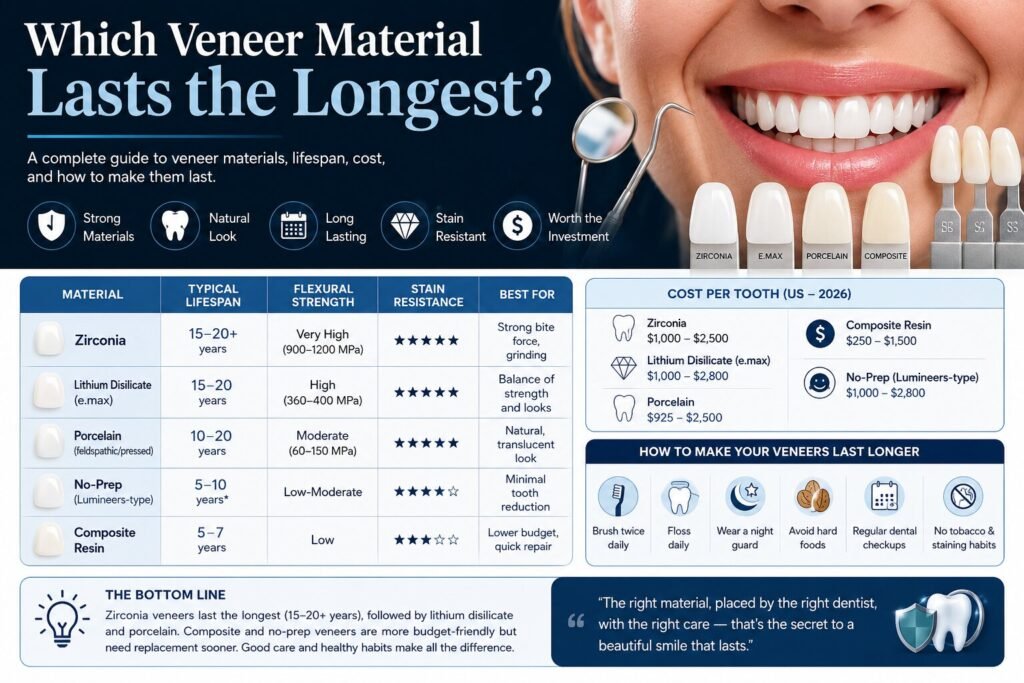
Zirconia veneers last the longest among common options. You can expect 15 to 20 years or more from them, but with good care. Lithium disilicate and porcelain follow close behind, they can last 10 to 20 years. Composite & no-prep veneers cannot last as long as zirconia, they are short of both, at 5 to 10 years. This is because of weaker bonding surfaces, material softness, & bulkier profiles. In this article, I will tell you 5 veneer material which people prefer most.
How Long Does Each Veneer Material Actually Last?
Every veneer material ages at a different pace. Where you get veneers, like the dentist and your daily routine, your care, also shape the outcome. A closer look at each material shows why the numbers vary so much.
Porcelain (Feldspathic and Pressed)
Porcelain remains the most common veneer material in cosmetic dentistry in 2026. According to a 2018 review of multiple studies found that porcelain veneers last 10 years or sometimes more in most cases. One tracked group of 84 patients kept their porcelain veneers for up to 20 years. Feldspathic porcelain gives you the most natural, see-through look. Pressed porcelain adds extra strength through a denser production method.
Lithium Disilicate (e.max-Type)
Lithium disilicate is a glass-ceramic material, and it offers far more flexural strength than standard porcelain. The numbers tell the story: roughly 360 to 400 MPa for lithium disilicate versus 60 to 150 MPa for feldspathic porcelain. That extra strength lets your dentist use thinner veneers without a loss in durability. Many dental labs now favor lithium disilicate for patients with mild teeth grinding. You can expect a lifespan close to porcelain, at 15 to 20 years.
Zirconia
Zirconia ranks as the strongest veneer material on the market in 2026. Flexural strength reaches 900 to 1200 MPa, far above porcelain or lithium disilicate. Zirconia resists chips and fractures better than any other option on this list. Dentists once reserved zirconia for back teeth and full-mouth work. Thin zirconia veneers now reach front teeth too. Zirconia use in veneers is newer than porcelain use, so long-term data remains limited. Early clinical reports point to 15 to 20+ years as a realistic range. One tradeoff exists: zirconia looks slightly less translucent than porcelain, so your dentist may add a porcelain layer on top for a natural front-tooth look.
Composite Resin
Composite veneers cost less upfront, but they wear out sooner. Most patients get 5 to 7 years from composite, per multiple dental sources. Composite also stains faster than porcelain or zirconia. Repairs stay simple and cheap, though, since your dentist can patch a chip in a single visit.
No-Prep Veneers (Lumineers-Type)
No-prep veneers use a thinner shell of porcelain. Manufacturers claim a lifespan up to 20 years, though independent estimates land closer to 10. Less tooth material gets removed before placement, which keeps the process reversible for many patients. Thinner material means less strength, so no-prep veneers chip more easily than standard porcelain.
Why Do Some Veneers Outlast Others?
Material strength depends on daily routine and care. Flexural strength measures how much bending force a ceramic can take before it fractures. Zirconia and lithium disilicate score far higher on this scale than porcelain or composite. Bonding quality matters too. A strong bond between your tooth and your veneer spreads bite force evenly, and that lowers your risk of cracks. Your dentist’s skill affects this bond directly. Your daily habits play a role as well. Grinding, nail biting, and hard foods shorten the lifespan of any material, even zirconia.
How Do the Materials Compare at a Glance?
| Material | Typical Lifespan | Flexural Strength | Stain Resistance | Best For |
| Zirconia | 15–20+ years | Very high (900–1200 MPa) | Excellent | Strong bite force, grinding |
| Lithium disilicate (e.max) | 15–20 years | High (360–400 MPa) | Excellent | Balance of strength and looks |
| Porcelain (feldspathic/pressed) | 10–20 years | Moderate (60–150 MPa) | Excellent | Natural, translucent look |
| No-prep (Lumineers-type) | 5–10 years* | Low-moderate | Good | Minimal tooth reduction |
| Composite resin | 5–7 years | Low | Fair | Lower budget, quick repair |
How Much Does Each Material Cost Over Time?
Porcelain costs between $925 and $2,500 per tooth in the US. The average cost is $1,765 per tooth across the country. It costs around $9,000 to $20,000 or more for a full smile fix that includes six to eight front teeth.
Composite runs $250 to $1,500 per tooth. On average, it costs around $800 per tooth. Prices for a full set of 8 to 10 teeth usually range from $3,000 to $12,000.
By 2026, zirconia veneers will cost between $1,000 to $2,500 per tooth in the U.S. A full set will likely cost between $4,000 to $10,000 or more, depending on how many teeth are involved and where the doctor is located.
Veneers made of lithium disilicate, which is also known by the brand name e.max, cost between $1,000 to $2,800 each tooth in the US in 2026. Pricing depends on the region. In the Mid-Tier Markets, it costs around $1,000 to $1,950. In Subways, it costs $1,850 to $2,800 per tooth depend on the dentist. Internationally, like in Mexico, it costs around $350 to $600, but if added travling expance, it costs $1,000 to $1,500.
Sticker price only tells half the story. A composite veneer at $1,000 needs replacement roughly every 6 years. Over a 30-year span, that adds up to close to $5,000 per tooth, plus a new placement fee each round. A zirconia veneer at $2,000 can last 20 years or more. Over the same 30-year span, you likely pay for one placement and part of a second, near $3,000 to $4,000 total. Longevity often wins the long-run math, even at a higher starting price.
What Can Shorten the Lifespan of Any Veneer?
Some habits short the veneer life, no matter the material:
- Grinding or clenching your teeth
- Biting your nails or chewing on pens
- Biting hard foods like ice, nuts, or hard candy
- Poor brushing and flossing habits
- Contact sports without a mouthguard
- Skipped dental checkups
How Do You Make Your Veneers Last as Long as Possible?
A few habits protect your investment for years:
- Brush twice a day with a soft-bristled brush
- Floss daily to protect your gumline
- Ask your dentist about a night guard for grinding
- Book a checkup and cleaning every 6 months
- Skip the ice, hard candy, and pen caps
- Rinse your mouth after coffee, tea, or red wine
- Quit tobacco, since it stains and weakens the bond over time
Does your age change which material makes sense?
It can, though it’s more about your life stage and habits than your birthday.
Teens and young adults are usually not great candidates for veneers of any kind yet. Teeth and gums are still shifting, and a veneer placed too early may need replacing sooner than expected once your bite settles.
Adults in their 20s to 40s are the group where the porcelain-versus-composite decision matters most, because this is often when people are choosing veneers for the first time and expect to keep them a while. If you clench or grind at night, that habit will shorten either material’s lifespan, so a nightguard becomes part of the decision regardless of which one you pick.
Adults in their 50s and beyond sometimes have more gum recession or existing dental work to work around. Porcelain still tends to outlast composite here, but the bigger factor at this stage is often the condition of the teeth underneath, not just which shell goes on top. A dentist needs to check that first.
Which Veneer Material Should You Choose?
Your choice depends on your priority. I explain every single thing about every veneer material before choosing any material, check your budget and compare these options. If you want veneer for back teeth, then Zirconia is a good option, or if you want veneer for front teeth, thin or beauty, then lithium disilicate is a perfect option for you.
If you want full restoration like crowns, bridges or veneers, then Porcelain is the closest match to natural enamel, along with strong durability.
If you have physical damage, or you want minor fixing, then composite veneers suit you. Because it will not cost too much and it’s a quick cosmetic fix.
If you are the person who has gaps in their teeth, small teeth, or slight discoloration, then No-prep veneers are best for you. A short consultation with your dentist clears up which material fits your bite, your budget, and your smile goals best.

Other Articles

Top 10 Dentists in New York: A Complete Guide for 2026
What Are 3 on 6 Dental Implants?